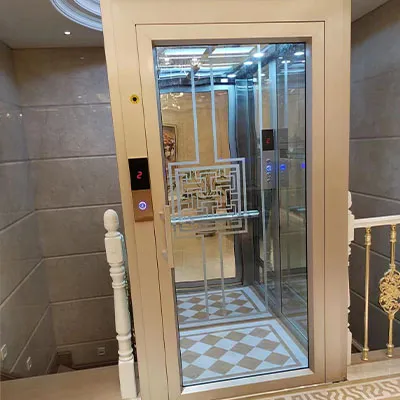
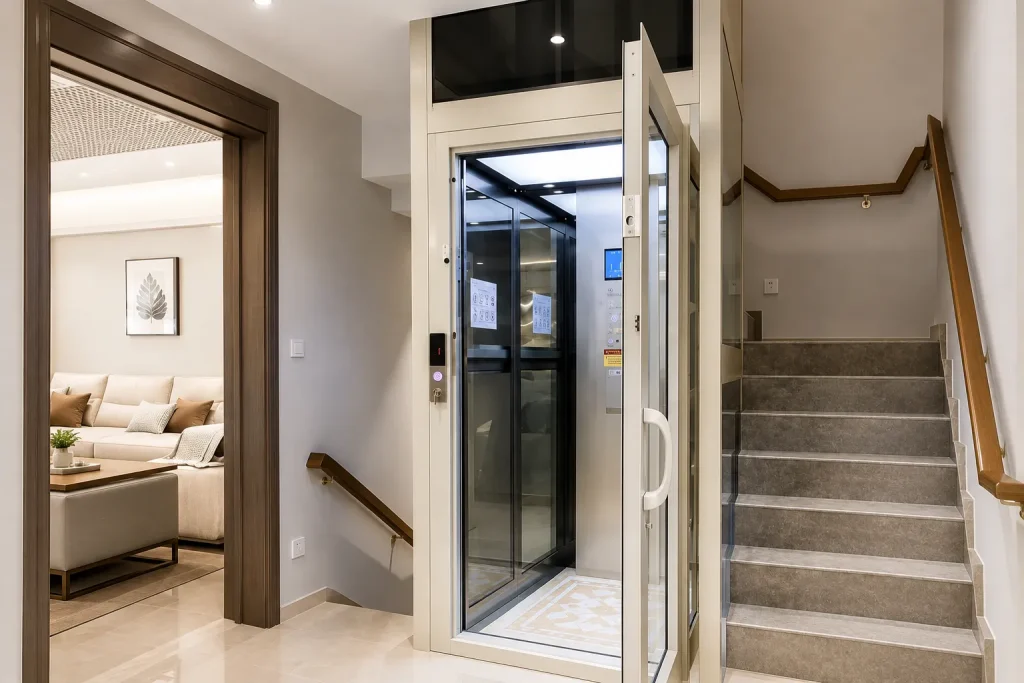
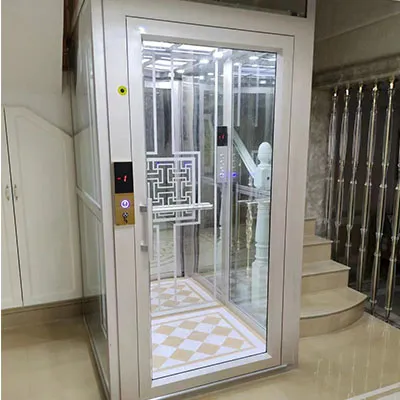
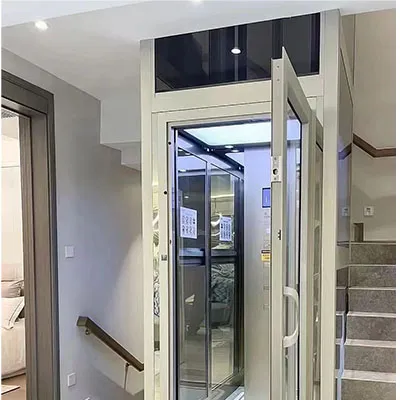
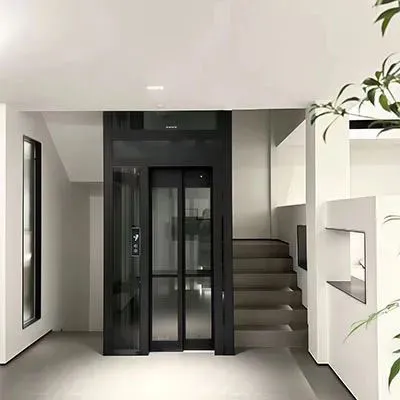
Un ascenseur résidentiel à commande hydraulique pour villa utilise des cylindres, des pompes et des vannes de contrôle haut de gamme. Sa valve proportionnelle de haute précision permet de réguler la vitesse en douceur et en continu.
Ascenseur domestique à traction : Pas de salle des machines, ce qui permet de réduire les coûts. Utilise un contrepoids/un portique, s'adapte aux types de portes de la maison. Entraînement VVVF pour un déplacement en douceur
Holeless vs Roped Hydraulic Elevators: Key Differences
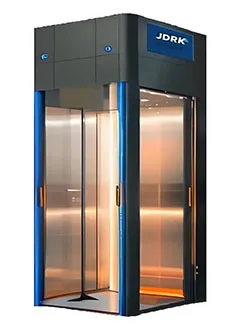
JDRK’s ascenseur domestique hydraulique is documented as zero-pit or shallow-pit, with a 150 mm minimum pit, no machine room, and no counterweight. What JDRK’s public specifications don’t state is whether its cylinder is holed, holeless, or roped, so those labels shouldn’t be assumed. Confirm cylinder configuration in writing before comparing quotes.
Compared with explainers that define the three hydraulic sub-types without any manufacturer specification attached, this guide separates what is general industry usage from what JDRK has actually published. That matters because “holeless,” “shallow-pit,” and “roped” describe three different design choices, and quotes that use the words interchangeably are hard to compare.
Holed, Holeless, and Roped Compared
The terms below reflect general industry usage; exact designs vary by manufacturer, so treat the table as a vocabulary guide, not a specification.
Dimension
Holed (In-Ground Cylinder)
Holeless
Roped Hydraulic
Cylinder Location
Extends into a bore drilled below the pit floor
Mounted in or beside the shaft; no bore drilled
Cylinder connected to the cab through ropes and a sheave
Site Drilling
Required
Not required
Depends on the roping layout
Cab Travel vs. Ram Stroke
Equal (direct-acting)
Equal or telescoping
Cab travels a multiple of the ram stroke, so the cylinder can be shorter
Main Site Constraint
Ground conditions and groundwater at the bore
Space beside the cab for the cylinder
Sheave and rope clearance overhead
Typical Pairing
Sites where drilling is practical
Retrofits where drilling is impractical
Often combined with a holeless layout
Are Holeless and Roped Mutually Exclusive?
No, and this is the most common misreading of the title question. “Holeless” answers whether a bore is drilled below the pit. “Roped” answers how the cylinder’s motion reaches the cab. A roped design can be holeless, and some manufacturers describe two-cylinder roped layouts as “dual roped holeless.” Choosing between them as if they were rival categories leads to quotes that don’t line up.
A second misreading: zero-pit or shallow-pit does not automatically mean holeless. Pit depth is one measurement; whether a cylinder bore is drilled is another.
JDRK’s Hydraulic Domestic Elevator: Published Specs
SGS, SGC, SGRZ, CNCA, CNAS, ISO 9001 (company-stated; certificate numbers not publicly disclosed)
Prix
Not published; quote required
5 Questions to Ask Before You Compare Quotes
1.Is the cylinder direct-acting or roped, and what is the roping ratio?
2.Is the cylinder single-stage or telescoping?
3.Is any bore drilled below the pit floor, and if so, to what depth?
4.What pit depth applies to my specific configuration: 150 mm, or zero-pit?
5.What top-floor clearance does the ram or sheave assembly need in my shaft?
Getting a Quote That Can Be Compared
JDRK quotes are built around your shaft, pit, and load requirements. Send the five questions above with your shaft measurements so the quote states cylinder configuration explicitly.
FAQ
Is a holeless hydraulic elevator the same as a zero-pit elevator?
No. Holeless refers to not drilling a bore below the pit for the cylinder; zero-pit refers to the pit depth itself. JDRK documents zero-pit and shallow-pit options (minimum 150 mm where a pit is used) but does not state its cylinder configuration.
Does a roped hydraulic elevator need a machine room?
Not inherently. JDRK’s hydraulic domestic elevator is machine-room-less, needing roughly 2 m of clearance above the top floor instead.
Does JDRK’s hydraulic elevator use a counterweight?
No. The design has no counterweight, with shaft space utilization up to approx. 70%.
What is the smallest shaft for JDRK’s hydraulic elevator?
Approximately 1,100 × 1,100 mm customized minimum, with a 2,600 mm minimum top-level height.

 Personnaliser la commandeType de traction Villa ElevatorAscenseur domestique à traction : Pas de salle des machines, ce qui permet de réduire les coûts. Utilise un contrepoids/un portique, s'adapte aux types de portes de la maison. Entraînement VVVF pour un déplacement en douceur
 French
 English
 German
 Russian
 Spanish
 Portuguese
 Dutch
 Arabic
 Czech
 Japanese
 Korean