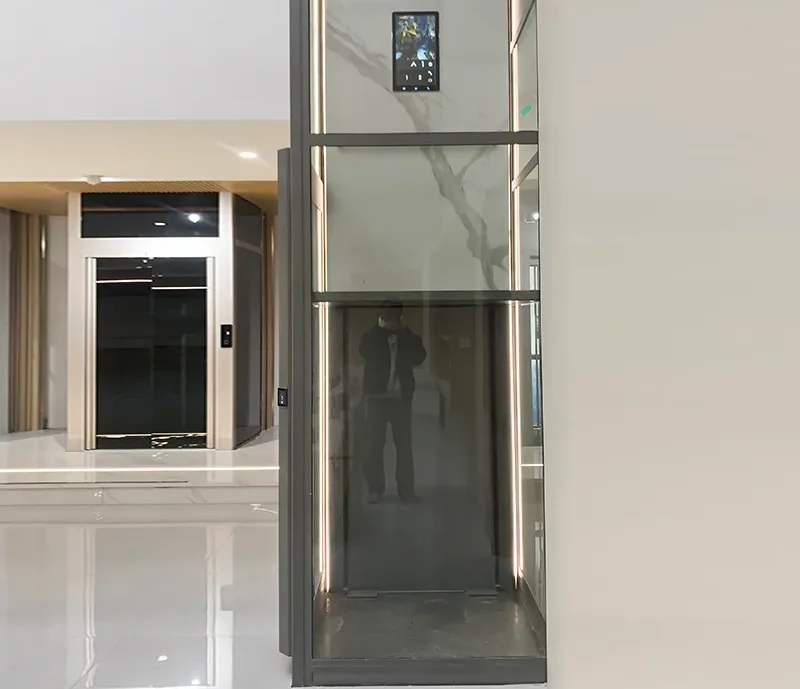
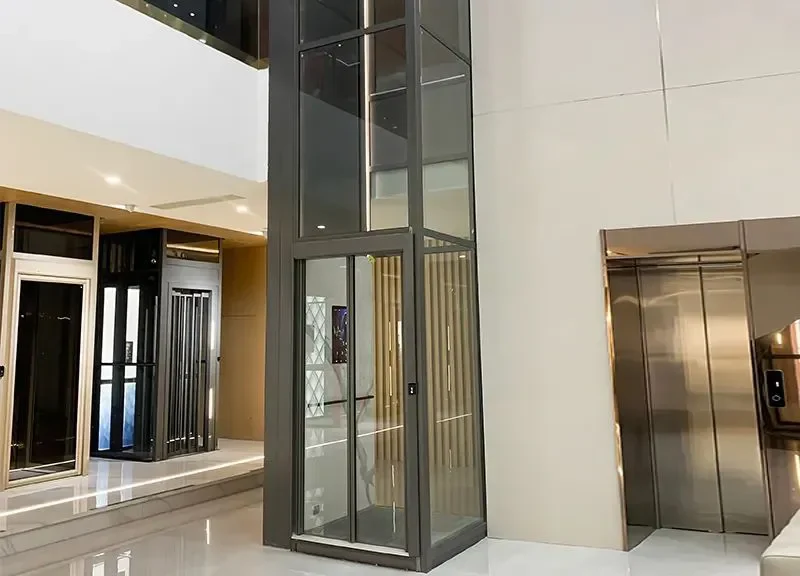
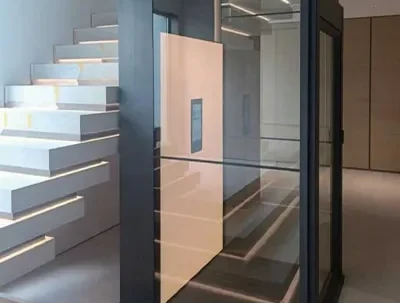
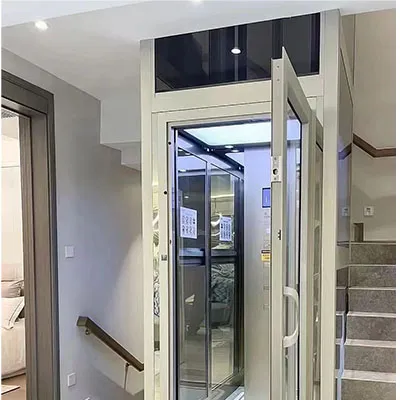
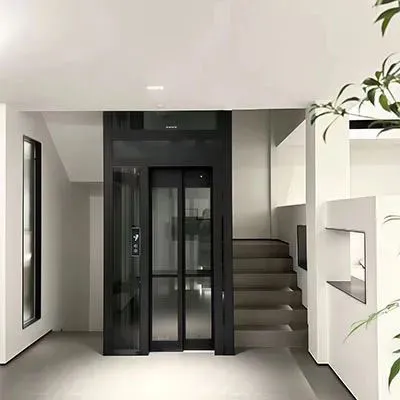
В лифте для виллы с гидравлическим приводом используются высококлассные цилиндры, насосы и клапаны управления. Его высокоточный пропорциональный клапан обеспечивает плавное и стабильное бесступенчатое регулирование скорости
Тяговый домашний лифт: Отсутствие машинного отделения, экономия средств. Используется противовес/козловой тип, подходит к типам дверей дома. Привод VVVF для плавного хода
Residential Elevator: How to Choose, Install, Troubleshoot, and Maintain a Home Elevator
A poorly planned residential elevator can waste space, create installation problems, and lead to frustrating service issues later. It gets worse when the project team treats it like a generic lift. The better solution is to choose the right home elevator system, plan the shaft correctly, and work with an experienced contractor from the start.
A residential elevator is a private-use elevator designed for homes, villas, duplexes, and low-rise residences. The best system depends on space, travel height, drive type, and user needs such as aging in place or wheelchair access. Good planning, correct installation, and simple troubleshooting knowledge help avoid common issues like door faults, power interruptions, and a lift that got stuck between floors.
What Is a Residential Elevator?
A жилой лифт is an elevator built for private residential use rather than for a large commercial building. It is usually designed for a villa, duplex, townhouse, or new house where owners want easier movement between levels, added comfort, better accessibility, or a long-term lifestyle upgrade. A home elevator is often more compact, more design-focused, and more customizable than a public-building lift.
In many homes, the lift becomes more than a convenience. It becomes an amenity that changes how people use the property. Older owners may want to stay in the home elevator-equipped house longer. Families may want easier movement between the first floor, 2nd floor, and top floor. Designers may want a compact lift that protects valuable living space while improving the feel of the interior.
Why Is a Home Elevator Becoming More Popular?
A home elevator is becoming more common because homes are changing. Buyers want long-term convenience, better accessibility, and more flexibility for multi-floor living. A lift can reduce stair dependence, support a wheelchair user, and make it easier for owners to stay in the same home as they age.
For higher-end villas, the жилой лифт also adds value beyond mobility. It can improve layout comfort, strengthen premium positioning, and support better use of upper floors. In many luxury homes, the elevator is no longer treated as a strange extra. It is part of a complete living plan.
That is why developers, designers, and a skilled elevator contractor increasingly discuss lift planning early, before final interior and structural decisions are locked in.
What Types of Residential Elevator Systems Are Available?
The two main system choices are hydraulic and traction. Jiade’s site presents both clearly. Its hydraulic domestic elevator uses cylinders, pumps, and control valves for stable low-rise residential travel, while its traction line includes backpack, gantry, platform, and panoramic products for villas and upscale residences.
A hydraulic system may suit low-rise homes where smooth lifting force and practical planning matter most. A traction system may suit buyers who want machine-room-reduced layouts, compact structures, or more premium ride positioning. Some homes also use MRL traction designs, while others prefer platform-based solutions for tight spaces.
How Much Space Does a Residential Elevator Need?
This is one of the first questions every buyer asks. The answer depends on the lift type, travel height, and the available shaft or hoistway area.
In planning terms, buyers should think about:
the elevator shaft
pit depth
overhead clearance
door swing or sliding-door needs
control-panel placement
how much square footage can realistically be assigned to the lift
For some homes, compact or MRL traction products reduce structural demands. For others, a hydraulic system may work well if the travel is short and the layout is straightforward. The most important step is to measure the real space in the home first.
What Should Buyers Know About Installation?
A smooth installation depends on planning, structure, and coordination. A good residential-elevator project usually involves the owner, the designer, the general contractor, and the elevator contractor working from the same assumptions. If the lift layout is treated as an afterthought, problems appear quickly: door clearance conflicts, shaft-size problems, wrong electrical routing, or delayed finishing work.
Installation Planning Checklist
Confirm travel floors and stopping levels
Confirm the elevator shaft location
Review pit and overhead dimensions
Confirm door type and жилой лифтdoor opening direction
Check power supply and circuit requirements
Coordinate finishing details before the final inspection
That kind of preparation makes the lift easier to install and easier to approve later.
Does a Residential Elevator Need a Machine Room?
Not always. Some residential lifts still use a machine room, while others use compact traction layouts that reduce or avoid a traditional separate room. Jiade’s traction villa elevator content specifically emphasizes no traditional machine room and cost-saving residential planning, while its hydraulic content focuses more on low-rise lift components and system stability.
That means buyers should not assume one answer fits all. Some projects may need a compact equipment zone. Others may use a cleaner MRL format. The key is to ask early whether the lift needs a separate machine room, whether it can fit in a reduced structure, and how that affects the design of the top of the hoistway and adjacent rooms.
For many residential projects, the best result comes from choosing a system that protects usable space while still keeping service access practical.
What Regular Maintenance Does a Residential Elevator Need?
Good regular maintenance is one of the biggest factors in long-term reliability. Residential lifts do not work well when they are ignored for years and then expected to behave like new. The service routine depends on the system type, but it generally includes inspections of door operation, guide systems, controllers, safety circuits, lubrication points, and drive-specific components.
For a hydraulic unit, the service team may review the cylinder, fluid condition, and valve performance. For a traction unit, they may inspect suspension members, guide systems, and traction equipment. In either case, the goal is the same: prevent surprise breakdowns and protect daily safety. Jiade’s residential product pages consistently emphasize safety, stable operation, and long-term home use, which fits this maintenance-first approach.
A good service plan should include:
periodic inspection
door and interlock checks
controller review
drive-system review
ride-quality checks
scheduled professional servicing
That is how a residential lift stays dependable.
How Do You Choose the Right Residential Elevator Contractor?
The best contractor is not simply the cheapest one. A strong residential-lift installer or partner should understand shaft planning, power requirements, interior coordination, and service after turnover. The best elevator contractor will ask good questions before quoting: where the lift starts, how many stops are needed, whether the user needs wheelchair access, and what the architectural constraints really are.
I would look for a contractor or supplier partner who can:
explain system options clearly
review layout and installation early
coordinate with the general contractor
support approval and handover
provide service after installation
That is especially important in premium homes, where the lift is part of the daily living experience, not just a mechanical feature hidden in the building.
Jiade (Shandong) Elevator Co., Ltd. positions itself as a manufacturer of home and villa elevators, with traction, hydraulic, platform, and optional custom solutions for premium residential projects. Its site emphasizes compact layouts, customization, safety, and factory-direct support for overseas B2B buyers such as developers, distributors, architects, and general contractor teams.
Вопросы и ответы
What is a residential elevator?
A жилой лифт is a private-use elevator designed for homes, villas, duplexes, and other residential properties. It helps people move safely between floors and is often selected for comfort, accessibility, and premium home design.
How much space does a home elevator need?
It depends on the lift type, travel height, and shaft layout. Compact home-lift models can reduce space requirements, but buyers should confirm the exact shaft size, pit depth, and overhead space before installation.
What should I do if the elevator is stuck?
Do not force the doors or try to manually free the lift. Check for a power issue or a door-latch problem, then contact the installer or service provider. If the elevator is stuck, safe professional support is the best option.
Does a residential elevator need regular maintenance?
Yes. Regular maintenance is important for safety, reliability, and long-term performance. The exact service needs depend on whether the system is hydraulic, traction, or platform-based.
Does every residential elevator need a machine room?
No. Some systems use a machine room, while others use compact MRL or reduced-space layouts. The correct answer depends on the product and the home design.
Can a residential elevator work for wheelchair access?
Yes. Many residential lifts can be designed to support wheelchair users, but cabin size, door width, and turning requirements should be confirmed during the planning stage.

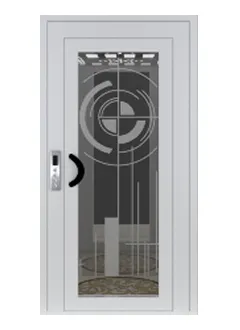
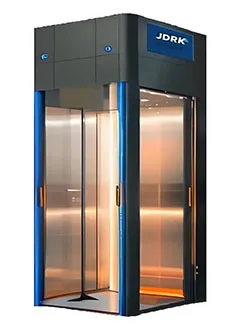
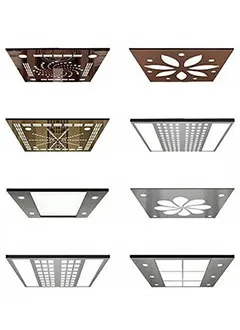
 Персонализация заказаТип тяги Вилла ЛифтТяговый домашний лифт: Отсутствие машинного отделения, экономия средств. Используется противовес/козловой тип, подходит к типам дверей дома. Привод VVVF для плавного хода
 Russian
 English
 French
 German
 Spanish
 Portuguese
 Dutch
 Arabic
 Czech
 Japanese
 Korean