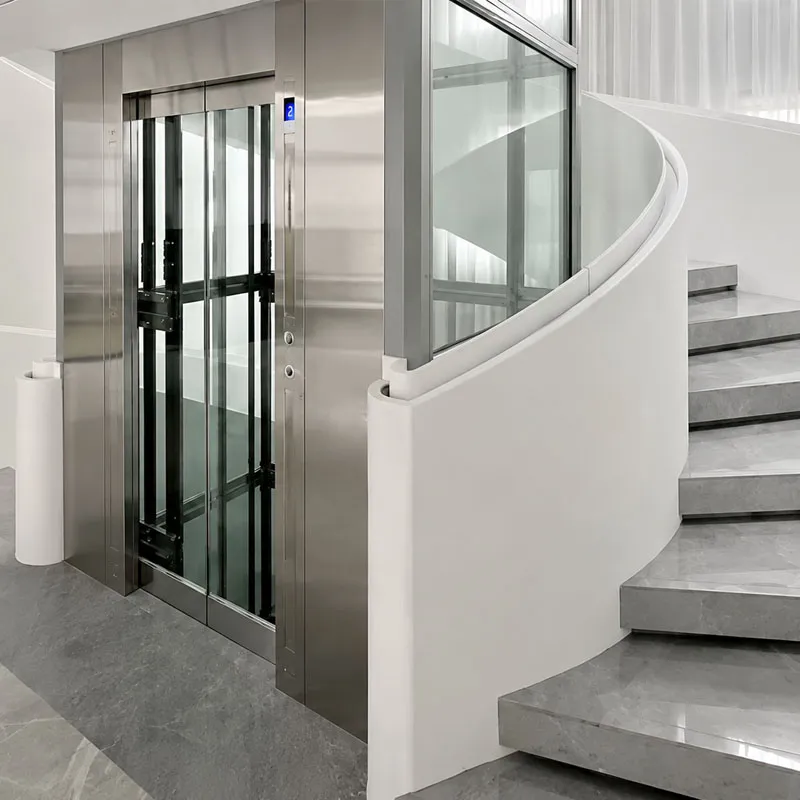
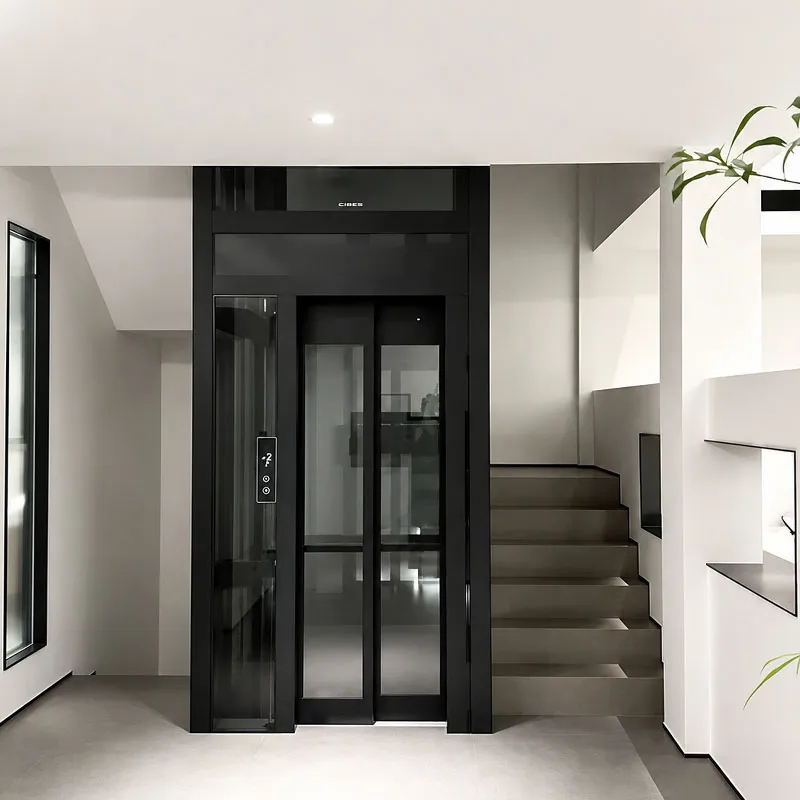
Um elevador residencial com acionamento hidráulico para vivendas utiliza cilindros, bombas e válvulas de controlo de alta qualidade. A sua válvula proporcional de alta precisão permite uma regulação estável e suave da velocidade sem escalonamento
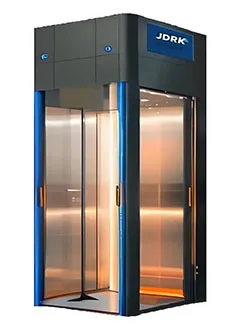
Elevador doméstico de tração: Sem casa de máquinas, poupa custos. Utiliza o estilo contrapeso/pórtico, adapta-se aos tipos de portas domésticas. Tração VVVF para uma condução suave
Machine Room Less Elevators: What MRL Means at Home
Jiade (Shandong) Elevator Co., Ltd. Technical Team | JDRK Product Team | Published: August 21, 2026
Machine room less (MRL) describes an elevator built without a dedicated overhead or separate equipment room — the drive components sit within or beside the shaft itself. At home, that usually means more usable roof or attic space and a shorter list of structural changes needed before installation.
What “Machine Room Less” Actually Means
MRL isn’t a brand name or a single technology — it’s a design category. Any elevator that eliminates the traditional standalone machine room, whether that room used to sit on the roof or in a separate closet, qualifies as MRL as long as the drive equipment is integrated into the shaft or a compact housing near it. The term describes where the equipment lives, not how the elevator moves the cabin.
MRL Isn’t Just a Traction Feature
Most explanations of MRL online are written around elevadores de tração for commercial buildings, since that’s where the technology first displaced the old rooftop machine room. That framing leaves out a detail that matters for a villa retrofit: hydraulic elevators can be MRL too. A hydraulic system that houses its proportional valve near the shaft base instead of in a separate plant room meets the same definition — no dedicated equipment room — through a completely different drive mechanism. JDRK’s own Home/Villa Hydraulic Elevator is built this way, alongside the traction line covered in detail below.
How JDRK’s Traction Type Villa Elevator Achieves MRL
The Traction Type Villa Elevator uses a permanent-magnet synchronous machine paired with a polyurethane steel-belt, mounted in a backpack or gantry configuration rather than a rooftop room.
A few specifics define how this line delivers MRL in practice:
The drive runs on standard 220V single-phase household power, with total consumption around 1.5 kW — 1.1 kW of that is the traction drive itself.
The polyurethane belt is lubrication-free and rated for 2–3 times the service life of a traditional steel wire rope, which changes what “maintaining an MRL system” actually involves.
A built-in UPS handles ARD auto-leveling if power cuts out mid-ride, bringing the cabin to the nearest landing.
Cabin finish options include panoramic round glass and minimalist styles, since removing the machine room doesn’t constrain cabin design the way some assume.
The Misconception: No Machine Room Doesn’t Mean No Equipment
MRL gets read as “nothing to house,” and that’s not accurate for either drive type. The traction line’s backpack or gantry unit is still a physical assembly that occupies space at the top of the shaft — it’s compact and integrated, not absent. A hydraulic MRL system carries the same caveat with its valve and reservoir near the shaft base. What MRL removes is the separate structural room and its footprint elsewhere in the building, not the equipment itself.
Two Ways to Reach MRL at Home
Traction MRL (JDRK Villa Elevator)
Hydraulic MRL (JDRK Home/Villa Elevator)
Drive mechanism
Permanent-magnet motor, steel-belt
Proportional valve, pressure-driven
Equipment location
Backpack/gantry unit near shaft top
Valve and reservoir near shaft base
Counterweight
Yes
None
Power
220V single-phase, ~1.5 kW
Not published for this line
Full shaft, pit, and clearance figures for the hydraulic line are covered in JDRK’s hydraulic elevator guide rather than repeated here, since the two products solve MRL through different mechanics.
Why Villas Look at MRL Specifically
A villa or existing house rarely has spare square footage to dedicate to a machine room the way a commercial building’s rooftop plant space does. Removing that room means the shaft footprint itself becomes the main space constraint instead of finding room elsewhere in the structure — which is why the shaft and clearance numbers matter more for a villa retrofit than the machine-room question ever does once MRL is a given.
Pricing
JDRK doesn’t publish pricing for the Traction Type Villa Elevator — the product page routes to a quote request. Since MRL removes a cost variable (no separate machine-room construction) but the drive and belt system carry their own cost, a quote based on your specific shaft and power setup is the only reliable number here.
FAQ
Q: Does machine room less only apply to traction elevators?
A: No — MRL describes where the equipment is located, not the drive type. JDRK’s hydraulic and traction villa lines are both machine-room-less, through different mechanisms.
Q: If there’s no machine room, where does the equipment go?
A: On JDRK’s traction line, the drive sits in a compact backpack or gantry unit near the top of the shaft rather than a separate room.
Q: Is an MRL elevator harder to maintain than one with a traditional machine room?
A: Not necessarily — JDRK’s traction belt is rated lubrication-free with 2–3 times the service life of steel rope. Maintenance access is a different consideration than maintenance frequency.
Q: Does MRL affect how the elevator looks inside?
A: No — JDRK’s traction line offers panoramic round glass and minimalist cabin finishes regardless of the machine-room-less drive configuration.
If you’re weighing which MRL type fits your villa, JDRK’s team can walk through your shaft and power constraints directly.

 Personalizar encomendaTipo de tração Villa ElevatorElevador doméstico de tração: Sem casa de máquinas, poupa custos. Utiliza o estilo contrapeso/pórtico, adapta-se aos tipos de portas domésticas. Tração VVVF para uma condução suave
 Portuguese
 English
 French
 German
 Russian
 Spanish
 Dutch
 Arabic
 Czech
 Japanese
 Korean