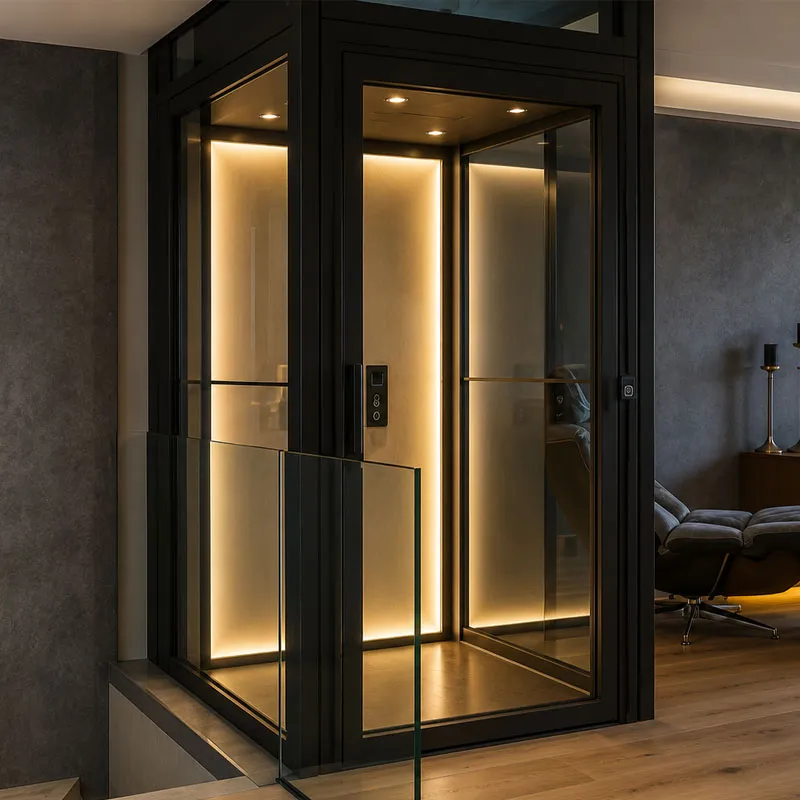
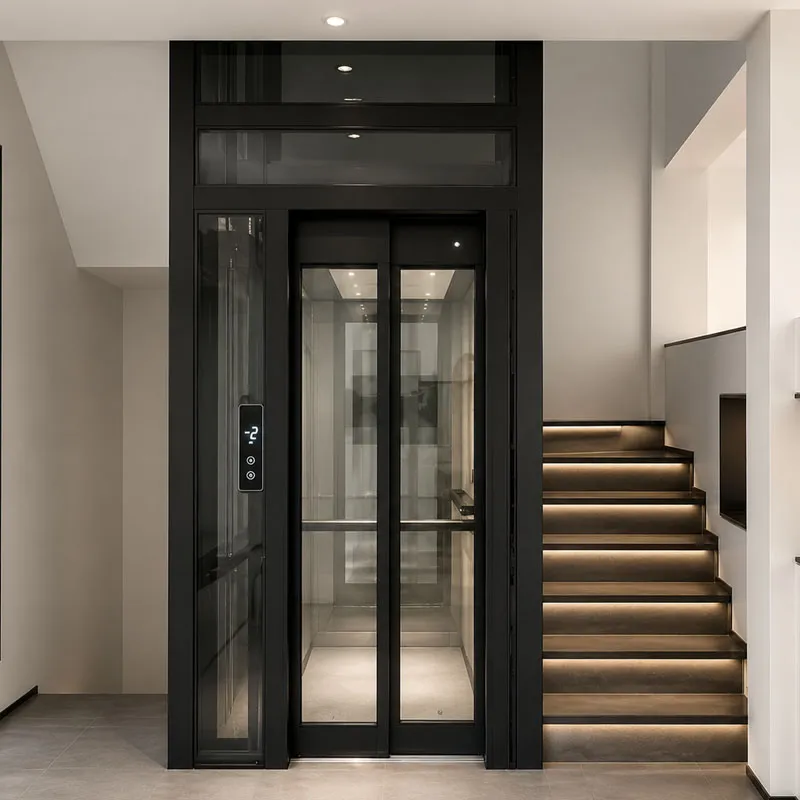
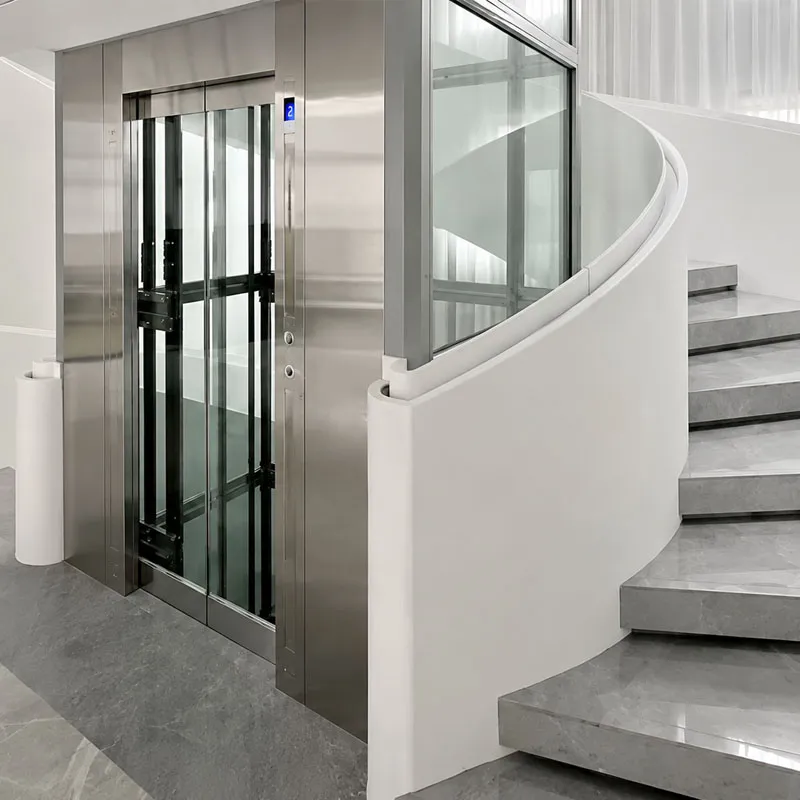
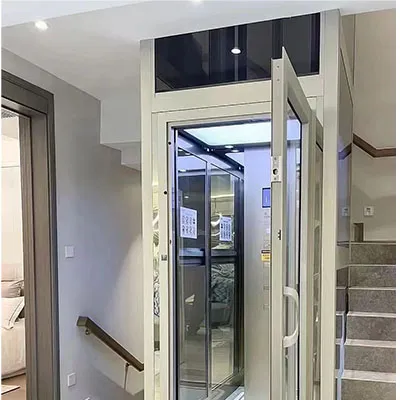
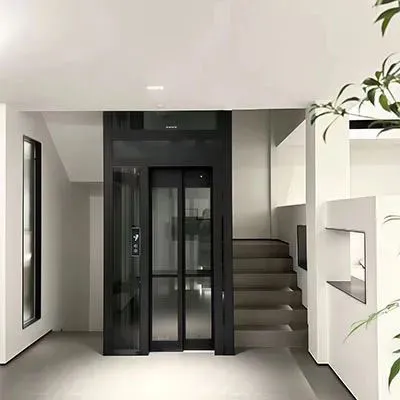
Un ascenseur résidentiel à commande hydraulique pour villa utilise des cylindres, des pompes et des vannes de contrôle haut de gamme. Sa valve proportionnelle de haute précision permet de réguler la vitesse en douceur et en continu.
Ascenseur domestique à traction : Pas de salle des machines, ce qui permet de réduire les coûts. Utilise un contrepoids/un portique, s'adapte aux types de portes de la maison. Entraînement VVVF pour un déplacement en douceur
Hydraulic Home Elevator for Villas: Hydraulic vs Traction Home Lift Elevator Guide
A beautiful villa can still feel difficult when stairs block daily movement. For elderly users, wheelchair users, and busy families, this problem grows over time. A hydraulic home elevator gives a private house a safer, smoother, and more comfortable lift solution.
A hydraulic home elevator is a residential lift designed for villas, private homes, and low-rise luxury houses. It uses a hydraulic system to move the elevator car smoothly between floors. Compared with traction, hydraulic lifts are often valued for stable lifting force, simple structure, and comfortable home use.
What Is a Hydraulic Home Elevator for a Villa?
A hydraulic home elevator is a private residential elevator made for a villa, luxury home, townhouse, or private house. It helps people move between floors without using stairs. In many projects, the buyer may also call it a home lift, lift elevator, residential lift, or villa elevator.
Unlike a large passenger elevator used in hotels or commercial buildings, a home elevator focuses on comfort, quiet operation, and good interior design. It should fit the home’s layout, not fight against it. That is why many homeowners and villa developers ask for a compact elevator, custom cabin, panoramic glass, or a seamless design.
For Jiade (Shandong) Elevator Co., Ltd., a villa elevator is not just a machine. It is an elevator solution for modern residential life. We study the number of floors, available space, elevator shaft position, hoistway condition, power supply, and decoration style before recommending the right home elevator.
Why Do Modern Villas Need a Home Lift?
A home lift makes a villa easier to live in. Stairs may look simple, but they become a daily challenge for elderly parents, wheelchair users, children, and people carrying luggage. A lift can support accessibility and make every floor easier to reach.
In a modern villa, a home elevator also improves comfort. It helps the homeowner use the whole residence, from basement garage to bedroom level and roof terrace. This is especially useful in a high-end villa with multiple floors. The lift becomes part of daily life, not only a luxury item.
A well-planned villa lift can also support property value. Buyers of modern luxury homes often look for safety, comfort, and future-ready design. A home elevator may make the home more attractive to families who want long-term convenience and barrier-free movement.
Hydraulic vs Traction: Which Home Elevator System Is Better?
The topic of hydraulic vs traction is common in villa elevator projects. A hydraulic elevator uses hydraulic fluid and pressure to move the elevator car. A traction elevator uses a motor, guide rail system, and suspension parts such as wire rope or steel belt to move the elevator.
Both systems can work well. A hydraulic home elevator may be suitable for low-rise residential applications because it offers strong lifting power and stable movement. A traction home elevator may be preferred when the buyer wants efficient operation, a different machine room layout, or a premium ride for more floors.
Comparison Point
Hydraulic Home Elevator
Traction Home Elevator
Best Use
Low-rise residential villas
Modern villas requiring greater travel height
Qualité de roulement
Stable and smooth
Smooth and energy-efficient
Drive System
Oil-pressure hydraulic system
Motor-driven rope or belt traction system
Machine Room
May require space for a hydraulic power unit
Machine-room-less designs are commonly available
Maintenance Focus
Hydraulic oil, seals, and valves
Motor, brake, ropes or belts, and controller
Buyer Considerations
Lifting power, stability, and installation space
Energy consumption, ride quality, and system layout
Common Applications
Hydraulic villa elevators and private homes
Traction home elevators and luxury villas
ASME states that A17.1/CSA B44 is widely used in North America as a safety code for the design, construction, installation, operation, inspection, testing, maintenance, alteration, and repair of elevators and related equipment. For global B2B buyers, this is a reminder: the best elevator system is not only about price. It must match safety rules, building conditions, and user needs.
How Does a Hydraulic System Work in a Home Lift Elevator?
A hydraulic system moves a lift by using hydraulic fluid under pressure. In simple words, the power unit pushes oil, the oil creates force, and that force moves the elevator car or lift platform. This is why hydraulic lifts are often known for steady lifting power.
In a home lift elevator, this system is useful because villa travel height is often moderate. A hydraulic elevator can be designed for comfortable home use, with smooth starts and controlled stops. The result is a lift that feels safe and easy for family members.
A good hydraulic home elevator should also manage wear and tear. The hydraulic oil, pump, valves, cylinder, guide rail, and control system must work together. Poor matching can create noise, uneven movement, or service issues. This is why factory design experience matters.
When Is a Small Hydraulic Home Lift the Right Choice?
A small hydraulic home lift can be the right choice when the villa has limited space but still needs safe vertical movement. It can help in a small private home, compact villa, or renovation project where building a large elevator shaft is difficult.
For example, a homeowner may want a lift between the ground floor and second floor. The available space may be beside a staircase or near a hallway. In this case, a compact hydraulic home elevator or shaftless elevator may be considered if the building conditions allow it.
A small home lift should never be chosen only because it looks cost-effective. Buyers must confirm cabin size, load capacity, door opening, travel height, installation conditions, and accessibility needs. If wheelchair access is required, the cabin size and entrance width must be checked early.
What Should You Know Before You Install a Home Elevator?
Before you install a ascenseur domestique, the first step is site checking. The buyer should prepare building drawings, floor height, shaft size, pit depth, top clearance, power supply, and decoration requirements. These details help the lift manufacturer recommend the right elevator model.
A villa elevator may need a hoistway, elevator shaft, steel frame, glass enclosure, or reserved building space. Some hydraulic home elevator projects may also need space for the hydraulic power unit. Some traction home elevatorprojects may need different top height or rail conditions.
Important pre-installation checks include:
Project Check
Why It Matters
Number of Floors
Determines the required travel height and drive-system selection
Available Space
Determines the cabin dimensions and shaft design
Power Supply
Affects the controller and motor configuration
Hoistway Condition
Influences the installation method and structural requirements
Elevator Shaft
Required for many conventional elevator systems
Door Direction
Affects passenger flow and interior layout
Accessibility
Essential for elderly passengers and wheelchair users
Interior Design
Guides cabin, glass, color, and finish selections
Local Standards
Affect inspection, certification, and safety planning
The U.S. Access Board explains that private residence elevators and platform lifts are addressed in accessibility guidance, including requirements for controls, doors, and use in certain residential settings. Local code can vary by country, so B2B buyers should confirm rules before ordering.
How Can Customization Improve Interior Design and Property Value?
Customization helps a home elevator match the villa. A lift should not look like a random add-on. It should feel seamless. For a luxury home, the elevator’s color, cabin material, lighting, control panel, and door style all affect the final interior design.
A custom villa project may use panoramic glass, aluminum alloy profiles, stainless steel, wood-grain panels, soft LED lights, mirror surfaces, or minimalist buttons. Some buyers prefer glass elevators for a modern residential look. Others want a warm cabin that matches stone, wood, or wall panels.
Common customization options include:
Customization Area
Available Options
Cabin Design
Stainless steel, painted panels, glass, or wood-look finishes
Structure
Conventional shaft, glass shaft, steel frame, or shaftless design
Door
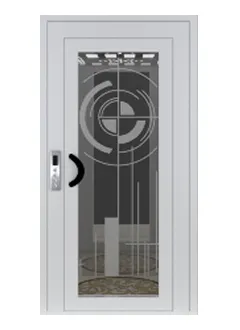
Swing door, automatic door, or glass door
Couleur
Grey, black, white, champagne, or custom colors
Lighting
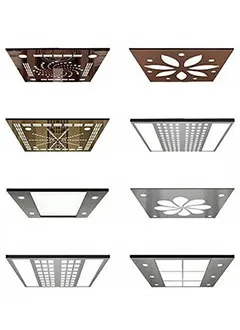
LED ceiling lights, light strips, or soft lighting
Control Panel
Button panel, touchscreen panel, or customized interface language
Branding
OEM logo, distributor branding, or custom packaging
Drive System
Hydraulic, traction, or platform lift system
For developers and distributors, customization does more than improve looks. It helps fit local market taste. It can also support property value because buyers often prefer a home elevator that looks planned, premium, and part of the home.
What Elevator Models Are Available for Villa Elevator Projects?
Different villa elevator projects need different elevator models. A low-rise private house may need a residential hydraulic elevator. A modern villa may prefer a traction elevator. A project with limited space may consider a shaftless elevator or compact home lift. A premium residential elevator project may choose panoramic glass.
Common elevator types for villas include:
Hydraulic home elevator for stable low-rise residential use
Traction home elevator for smooth travel and modern layouts
Panoramic villa elevator for luxury home design
Shaftless elevator for certain limited-space projects
Platform lift for accessibility and short vertical travel
Passenger lift for larger private residential buildings
Custom villa elevator for special dimensions and finishes
The right home elevator depends on the building, not only the catalog. A villa with three floors, a central atrium, and modern luxury decoration needs a different lift elevator solution than a small home with one short travel height.
ISO 8100-1:2026 covers safety rules for the construction and installation of passenger and goods passenger lifts. ISO 8100-20:2018 focuses on global essential safety requirements and notes that “lift” is used as the term instead of “elevator” in that standard context. This matters for international buyers because terminology and standards may differ by market.
How Do Safety, Power Supply, and Smooth Operation Affect Use?
A home elevator must feel safe every day. Good safety design may include emergency stop, door lock protection, overload protection, emergency lighting, alarm system, backup lowering, and anti-fall protection. For home use, simple controls are also important because children and elderly users may use the lift.
Power supply should be confirmed before production. Different countries and projects may use different voltage and electrical conditions. The manufacturer should match the elevator system with local power supply to support safe and stable operation.
Smooth operation is another key point. A good hydraulic villa elevator should start gently, stop accurately, and move with quiet operation. For a homeowner, these small details matter. For a distributor, they reduce complaints. For a developer, they protect brand reputation.
How Does a Hydraulic Villa Elevator Support Accessibility?
A hydraulic villa elevator can support accessibility by making multiple floors easier to reach. For families with elderly users or wheelchair users, it reduces the need to climb stairs. For a private home, this can change the way people live in the space.
Barrier-free design is becoming more important in modern home elevators. Even when the current homeowner does not need wheelchair access, future users may. A home elevator can help the residence stay useful for more years.
The U.S. Access Board notes that platform lifts in covered accessible routes should allow unassisted entry and exit, and it also addresses private residence elevators in residential dwelling units. This supports a simple idea: accessibility should be planned, not added too late.
What Affects Elevator Cost in a Home or Villa Project?
Elevator cost depends on more than the lift itself. The price may change based on number of floors, travel height, cabin size, drive system, door type, decoration, installation conditions, shipping, and local service needs.
A hydraulic home elevator may have one cost structure, while a traction elevator may have another. A panoramic cabin, aluminum alloy frame, glass shaft, or custom control panel can also affect price. For B2B buyers, the lowest price is not always the best choice.
A cost-effective elevator is one that matches the project correctly. It should be safe, easy to install, good-looking, and reliable over its service life. If the lift fails often, creates noise, or does not fit the shaft, the “cheap” choice becomes expensive.
Why Should B2B Buyers Choose Jiade for Hydraulic Villa Elevator Projects?
Jiade (Shandong) Elevator Co., Ltd. is a professional elevator manufacturer specializing in high-end home elevators and villa elevators. We focus on research, development, manufacturing, and sales of complete residential elevator solutions for overseas projects.
Our overseas customers include villa developers, luxury residential developers, home elevator distributors, agents, construction contractors, architects, interior design studios, and engineering companies. These buyers usually care about safety, operational stability, drive system reliability, customization, and long-term cooperation.
Jiade supports B2B buyers with:
Hydraulic home elevator and traction elevator model selection
Custom villa elevator design support
OEM/ODM cooperation for distributors and agents
Cabin, color, glass, and decoration customization
Project drawing review and technical communication
We do not position Jiade as a low-price supplier only. We focus on high-end villa elevator projects where product stability, design quality, and customer trust matter.
Practical Case: Choosing an Elevator for a Modern Villa
Imagine a modern villa with three floors, a glass stair area, and a homeowner who wants a comfortable lift for parents and guests. The architect wants the elevator to match the interior. The contractor wants easy installation. The distributor wants a model that can be repeated for future residential elevator projects.
In this case, Jiade may compare a hydraulic home elevator, traction home elevator, panoramic cabin, and compact shaftless option. If the project needs stable lifting and low-rise residential use, a hydraulic elevator may fit well. If the owner wants a machine-room-less layout and high-end ride, traction may be considered.
This is how a professional manufacturer adds value. We do not simply sell one model. We help buyers match the right home elevator to the building, user, design, and market.
FAQ
What is a hydraulic home elevator?
A hydraulic home elevator is a residential elevator that uses a hydraulic system to move the elevator car between floors. It is often used in villas, private houses, and low-rise residential applications.
Is a hydraulic elevator good for a villa?
Yes. A hydraulic elevator can be a good choice for a villa when the project needs stable lifting power, smooth operation, and comfortable home use. It is often suitable for low-rise residential projects.
What is the difference between hydraulic vs traction home elevator systems?
Hydraulic vs traction mainly refers to the drive system. A hydraulic lift uses hydraulic fluid and pressure. A traction elevator uses a motor with rope, belt, or traction components. The better option depends on travel height, available space, energy consumption, and ride expectations.
Can I install a home elevator in a private house?
Yes. You can install a home elevator in a private house if the structure, power supply, hoistway, shaft space, and local rules allow it. A professional lift manufacturer should review drawings before production.
How much does a villa elevator cost?
Villa elevator cost depends on number of floors, cabin size, drive system, door type, decoration, installation conditions, and customization options. A basic lift may cost less, while a high-end villa elevator with panoramic glass and custom finishes costs more.
Can Jiade customize a home lift elevator?
Yes. Jiade can customize a home lift elevator with different cabin materials, colors, glass, doors, control panels, lighting, dimensions, and OEM branding for B2B buyers.
Final Thoughts: Choose the Right Home Elevator, Not Just Any Lift
A hydraulic home elevator can make a villa safer, more comfortable, and more valuable. It helps families move between floors with less effort. It supports accessibility. It also improves the living experience in a modern villa.
But the right choice depends on the project. Some homes need hydraulic lifts. Some need traction. Some need panoramic design. Some need compact installation. Good planning prevents mistakes.
For villa developers, distributors, contractors, architects, and engineering companies, Jiade offers a professional path from selection to customization. If you need a reliable home elevator, villa elevator, hydraulic home lift, or traction home elevator for overseas residential projects, Jiade can help you build a practical and high-end elevator solution.

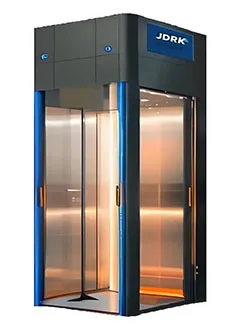
 Personnaliser la commandeType de traction Villa ElevatorAscenseur domestique à traction : Pas de salle des machines, ce qui permet de réduire les coûts. Utilise un contrepoids/un portique, s'adapte aux types de portes de la maison. Entraînement VVVF pour un déplacement en douceur
 French
 English
 German
 Russian
 Spanish
 Portuguese
 Dutch
 Arabic
 Czech
 Japanese
 Korean