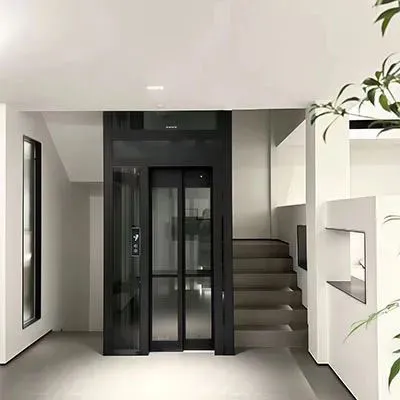
Un ascenseur résidentiel à commande hydraulique pour villa utilise des cylindres, des pompes et des vannes de contrôle haut de gamme. Sa valve proportionnelle de haute précision permet de réguler la vitesse en douceur et en continu.
Ascenseur domestique à traction : Pas de salle des machines, ce qui permet de réduire les coûts. Utilise un contrepoids/un portique, s'adapte aux types de portes de la maison. Entraînement VVVF pour un déplacement en douceur
MRL Traction Elevators for Villas: A Buyer’s Guide
Jiade (Shandong) Elevator Co., Ltd. Technical Team | JDRK Product Team Published June 2026
An MRL (machine-room-less) traction elevator drives the cabin with a compact traction machine mounted inside the shaft, in backpack or gantry configuration, instead of a separate machine room. JDRK’s villa units run on standard 220V single-phase power and use a permanent-magnet synchronous motor paired with a polyurethane traction belt.
What Makes an Elevator “MRL,” and Why Does It Matter for Villa Projects?
The term gets used loosely in sourcing queries, so it helps to be precise. A traditional traction elevator needs a dedicated room above or beside the shaft to house the drive machine, sheaves, and controller. An MRL unit folds that hardware into the shaft itself. JDRK’s version uses a backpack configuration (machine mounted to one side wall) or a gantry configuration (machine sits across the shaft head), both driven by a VVVF (variable-frequency) controller.
For villa retrofits, this distinction is the whole pitch. A homeowner or contractor converting a stairwell, light well, or corner of an existing building rarely has room for a plant room. Removing that requirement is what makes traction technology viable outside new-build commercial cores — and it’s why dealers see this keyword cluster dominated by sourcing intent rather than general education content. Buyers already know what MRL means; they’re checking who actually manufactures it.
Elevator equipment standards referenced by bodies such as ASME cover traction system safety requirements, including overspeed protection and drive redundancy — the baseline any MRL supplier’s drivetrain needs to satisfy before a unit ships to an international project.
Steel-Belt vs Rope-Driven Traction: The JDRK Difference
Most legacy traction elevators still run on steel wire rope. JDRK’s villa line replaces that with a polyurethane traction belt paired with a permanent-magnet synchronous motor. Two practical differences follow from that swap:
The belt runs lubrication-free, which removes a maintenance line item that steel rope requires on a fixed schedule.
JDRK states the belt’s service life at roughly 2 to 3 times that of traditional steel wire rope under comparable use.
Neither claim is independently audited; both are manufacturer-stated figures, and dealers quoting them downstream should note that. The trade-off worth flagging to end clients: belt-driven systems are quieter in normal operation but depend on the drive electronics working correctly during a power interruption, which is where the built-in UPS and ARD (Automatic Rescue Device) come in — the system auto-levels the cabin to the nearest floor on outage rather than leaving passengers stopped mid-shaft.
Running on Household Power: 220V Single-Phase Specs
This is usually the first technical question a contractor asks, and it’s a real differentiator against commercial-grade traction systems that need three-phase supply. JDRK’s Traction Type Villa Elevator is built for standard 220V single-phase household power. Total system draw runs about 1.5kW, with roughly 1.1kW of that going to the traction drive itself.
That matters in markets where running dedicated three-phase power to a residential retrofit is either impossible or cost-prohibitive. It also means the elevator can sit on the same circuit class as major household appliances rather than requiring a separate commercial-grade electrical upgrade.
Traction Type Villa Elevator: Full Spec Sheet
Parameter
Detail
Structure
Machine-room-less (backpack or gantry configuration)
SGS, SGC, SGRZ, CNCA, CNAS, ISO 9001 (site-wide); CE, ASME referenced on product pages
Shaft, pit, and overhead clearance for a given project depend on cabin size, travel height, and door configuration — request project drawings rather than assuming figures from a different product line, since hydraulic and traction units in JDRK’s catalog carry separate clearance requirements.
Cabin Finishes for Villa Interiors
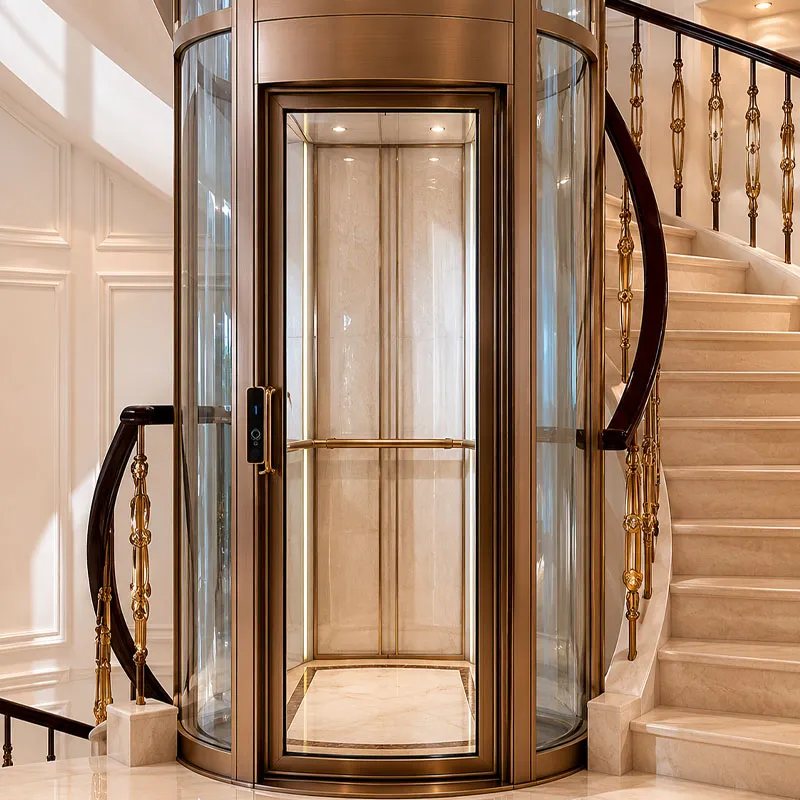
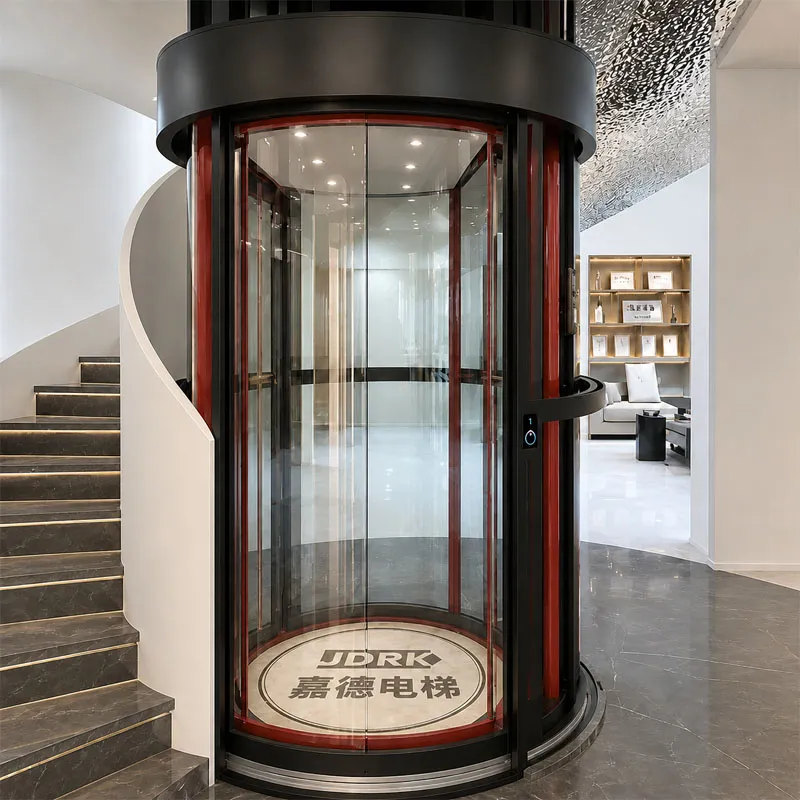
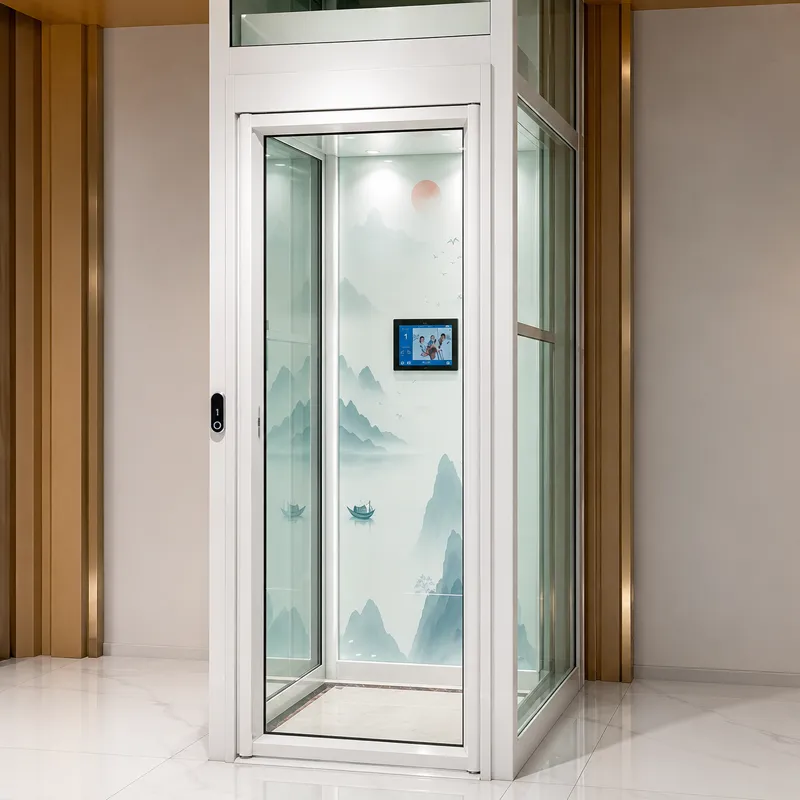
The traction platform ships in a panoramic round glass cabin, a minimalist finish, and additional variants beyond those two. The round glass option is the one that shows up most often in villa atrium and spiral-staircase projects, where an open sightline through the shaft is part of the design brief rather than an afterthought. Buyers weighing that option specifically should see our round glass elevator design breakdown for finish and framing detail that sits outside this guide’s scope.
The Misconception That Trips Up First-Time Buyers
“Machine-room-less” gets misread as “no shaft requirements at all.” It isn’t. MRL removes the separate plant room; it does not remove the need for adequate shaft depth, headroom, and structural support for the traction unit itself, which now lives inside that shaft envelope. Contractors sourcing an MRL unit for a tight retrofit still need a project-specific drawing before committing to a shaft opening, not a generic spec sheet.
Pricing and the Quote Process
JDRK doesn’t publish price ranges for the traction line, and the site routes every product page to a quote request rather than a listed figure. Final pricing depends on cabin finish, travel height, door type, and shipping destination, so there’s no single number that applies across configurations. Dealers should request a project-specific quote rather than working from a placeholder figure in a proposal.
Sourcing Notes for Dealers and Contractors
Search results for this keyword cluster are dominated by B2B marketplace listings and generic manufacturer ranking pages, most of which show a spec sheet with no real installed context. Compared to typical marketplace listings in this space, what a dealer actually needs before quoting a client is drivetrain detail (belt vs rope, motor type), power requirements that match the destination market’s electrical standard, and a manufacturer that will produce project-specific drawings rather than a fixed catalog size. JDRK has supplied over 10,000 installations across residential and villa projects to date, per company-reported figures — worth confirming against current documentation before citing it in a proposal.
FAQ
Q: Does an MRL traction elevator still need a pit?
A: Pit depth depends on the specific project configuration. JDRK doesn’t publish a fixed pit spec for the traction line separate from project drawings, so confirm the number for your shaft before finalizing a quote.
Q: What’s the practical difference between backpack and gantry configuration?
A: Backpackmounts the traction machine to one side wall of the shaft; gantry mounts it across the shaft head. The choice typically comes down to available shaft width and door placement on a given project.
Q: What happens if power cuts out mid-ride?
A: The built-in UPS and ARD system auto-levels the cabin to the nearest floor so passengers aren’t left stopped between floors.
Q: Can the cabin be customized beyond the standard finishes?
A: Yes — panoramic round glass and minimalist are the two named standard options, with additional finish variants available; confirm current options directly for a specific project.
Dealers evaluating multiple suppliers for an active project can request drawings and a configuration-specific quote through JDRK’s WhatsApp lines: +86 18453808217 or +86 15053187609.

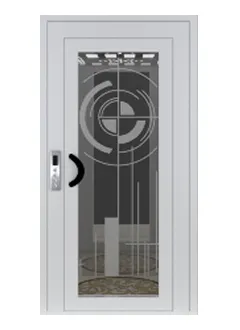
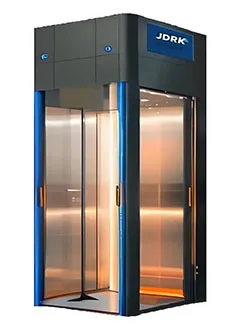
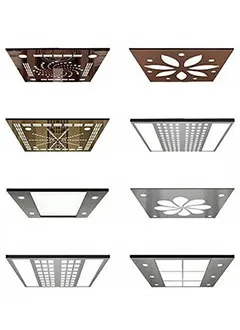
 Personnaliser la commandeType de traction Villa ElevatorAscenseur domestique à traction : Pas de salle des machines, ce qui permet de réduire les coûts. Utilise un contrepoids/un portique, s'adapte aux types de portes de la maison. Entraînement VVVF pour un déplacement en douceur
 French
 English
 German
 Russian
 Spanish
 Portuguese
 Dutch
 Arabic
 Czech
 Japanese
 Korean