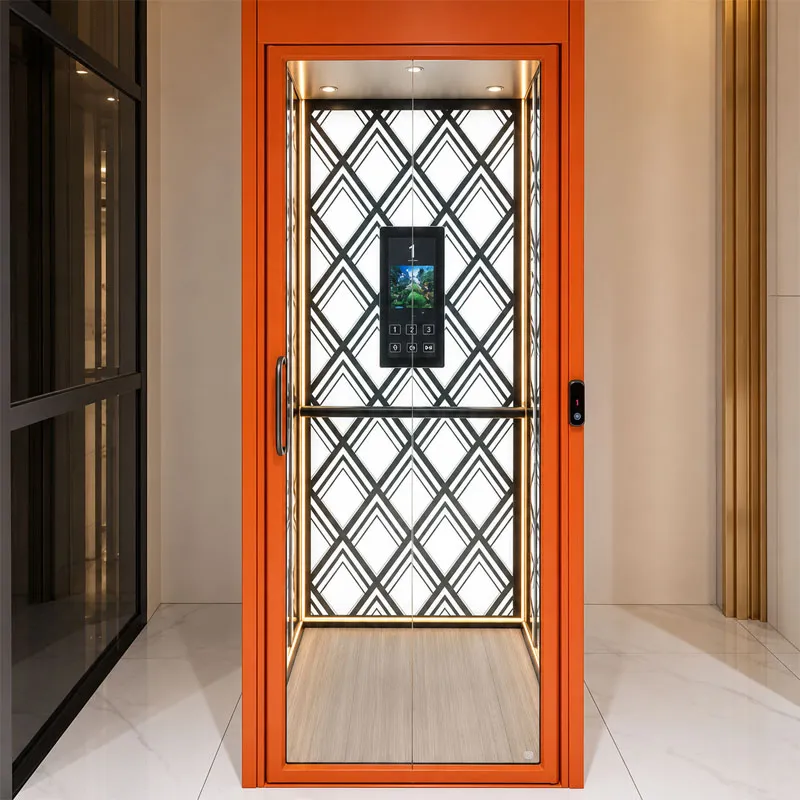
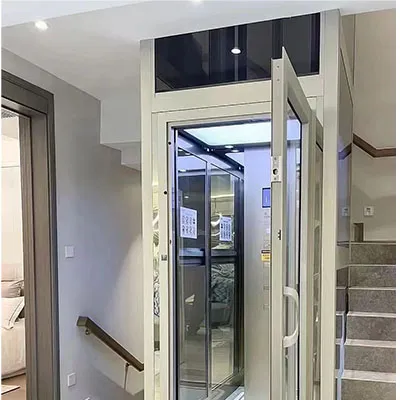
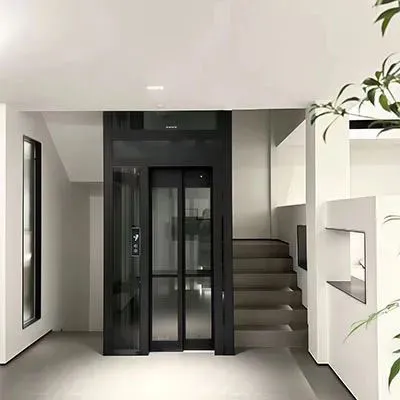
Un ascenseur résidentiel à commande hydraulique pour villa utilise des cylindres, des pompes et des vannes de contrôle haut de gamme. Sa valve proportionnelle de haute précision permet de réguler la vitesse en douceur et en continu.
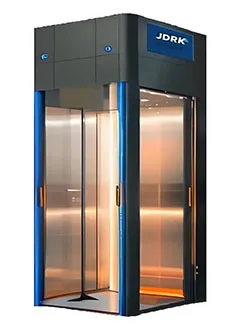
Ascenseur domestique à traction : Pas de salle des machines, ce qui permet de réduire les coûts. Utilise un contrepoids/un portique, s'adapte aux types de portes de la maison. Entraînement VVVF pour un déplacement en douceur
Platform Villa Elevator: How to Choose the Right Platform Lift, Home Elevator, or Villa Lift
A villa needs safe and easy movement between floors. But the wrong lift can waste space, look out of place, or fail to support wheelchair access. A well-planned platform villa elevator solves mobility needs while protecting comfort, design, and long-term residential value.
A platform villa elevator is a residential lift solution designed for villas, private houses, and luxury homes. It may refer to a vertical platform lift, platform elevator, home elevator, or customized villa elevator used for wheelchair accessibility, short vertical travel, or full-floor movement. The best choice depends on travel height, space, users, design, and safety needs.
What Is a Platform Villa Elevator?
A plate-forme villa ascenseur is a compact vertical transportation solution for a villa, private house, or luxury residential project. It can be a platform lift, vertical platform lift, platform elevator, home lift, residential elevator, or villa elevator depending on the structure and application.
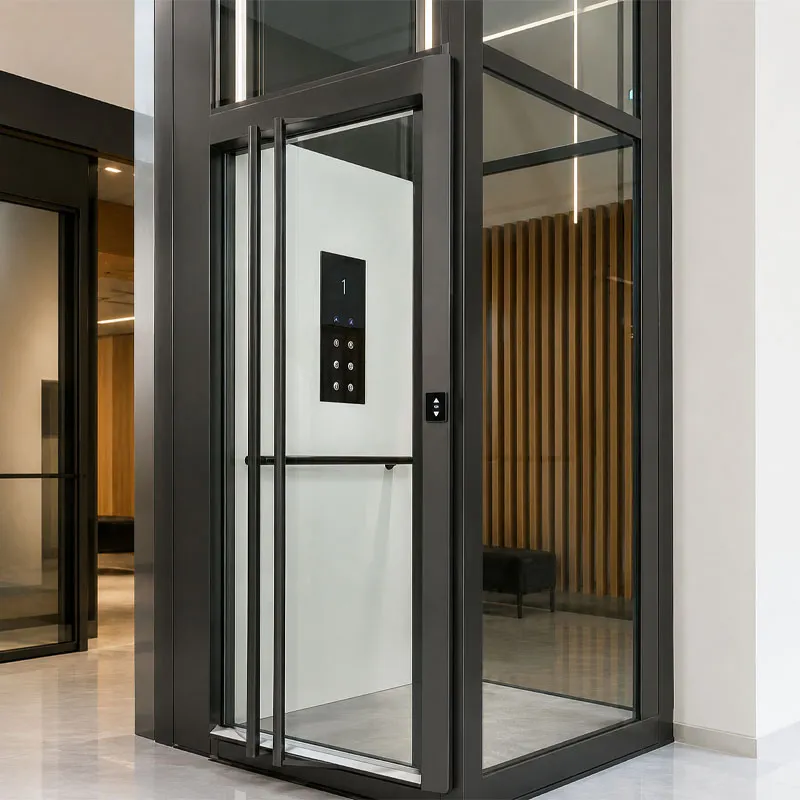
In simple terms, a platform lift usually moves people on a platform, often for short travel or wheelchair access. A home elevator usually has a fully enclosed cabin and works more like a traditional elevator, but with design and sizing made for residential use. Both can improve comfort. Both can support accessibility. But they serve different needs.
For B2B buyers, this difference matters. A villa developer may need a premium elevator for villa projects across multiple floors. A contractor may need a space-saving VPL for an entrance. An architect may want a panoramic villa lift that blends with the interior. A distributor may need several lift models for different local customers.
Jiade (Shandong) Elevator Co., Ltd. focuses on high-end home elevators and villa elevators. We support overseas buyers who need safe, stable, customizable, and factory-direct elevator solutions for private residential projects.
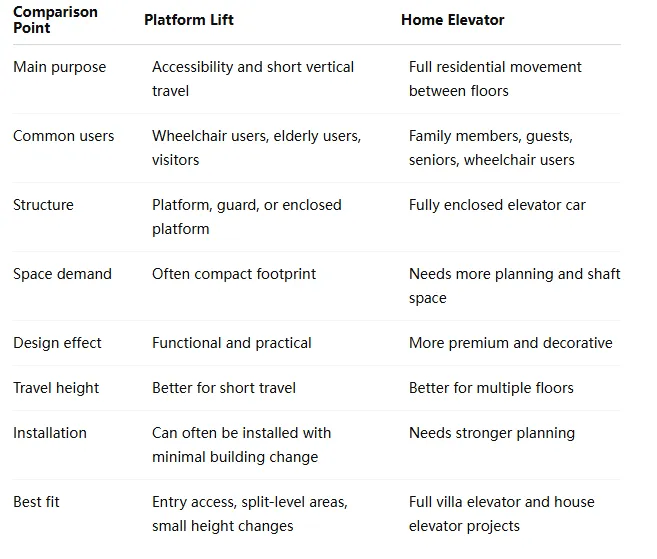
Platform Lift vs Home Elevator: What Are the Key Differences?
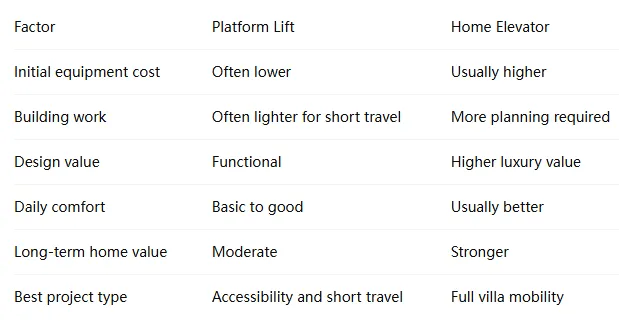
The phrase platform lift vs home elevator is common because buyers often compare these two before starting a villa project. A platform lift is often simpler and more compact. It may use an open platform or enclosed platform structure. A home elevator offers a more complete cabin experience and is often better for multiple floors.
A platform lift is usually selected for accessibility solutions, wheelchair users, short travel, or limited space. A home elevator is usually selected when the homeowner wants comfort, smooth ride quality, quiet operation, better decoration, and long-term value. In a high-end villa, the home elevator often becomes part of the interior design.
So, the key differences are simple. Platform lifts are particularly useful for barrier-free access. Lifts are also practical when space is limited. Home elevators offer better ride comfort, design value, and long-term use across floors inside a private home.
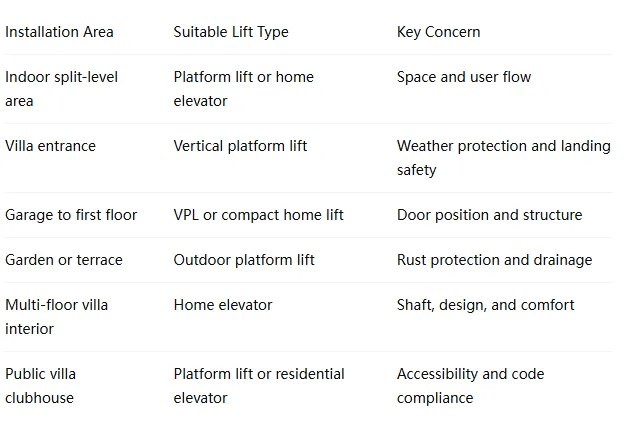
When Is a Vertical Platform Lift Ideal for a Villa?
A vertical platform lift is ideal for short travel where a wheelchair user needs safe access. It can be used at a villa entrance, garage, porch, basement step, garden level, or split-floor area. Unlike stair lift systems, a vertical platform lift moves straight up and down.
A vertical platform lift offers a practical solution when the project does not need a full elevator. For example, if a villa has only one raised entry area, a VPL may be enough. VPLs can be installed in many indoor and outdoor applications, depending on site conditions and local rules.
Common uses include:
Wheelchair accessibility at a raised villa entrance
Garage-to-living-area access
Garden or terrace level access
Short travel inside a split-level villa
Clubhouse or villa community access
Renovation projects with limited space
Residential and commercial access points
VPLs require clear floor space, safe landings, strong support, and a proper control system. They may require less space than full residential elevators, but they still need careful planning. A safe lift is never “just placed there.” It must fit the building, the user, and the local code.
When Should You Choose a Full Home Elevator Instead?
A home elevator is often better when the villa has multiple floors, premium decoration, frequent use, or long-term mobility needs. It works better when the homeowner wants the elevator to blend seamlessly into your home instead of looking like an added accessibility product.
A full home elevator can serve bedrooms, living rooms, garages, basements, roof terraces, entertainment rooms, and other living areas. It gives better privacy than many platform lifts. It can also carry more users with a smoother ride, depending on the model and drive system.
Choose a home elevator when the project needs:
Better ride comfort
More elegant design
Travel across multiple floors
Higher property value
More cabin customization
Better fit for premium home environment
Long-term aging-in-place support
A full elevator experience for daily family use
Many homeowners want a lift that works for today and tomorrow. A platform lift may solve one access problem. A home elevator can support the whole house. That is why a villa home elevator is often the stronger choice for high-end residential projects.
How Do Wheelchair Lift and Accessibility Needs Affect the Choice?
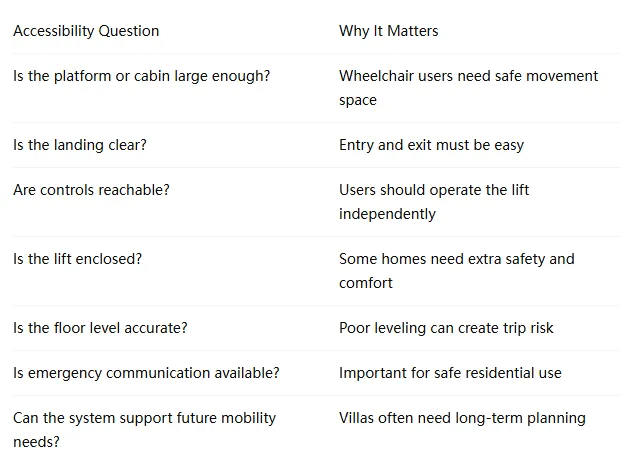
Accessibility is one of the main reasons buyers consider a lift. A wheelchair lift must offer enough platform space, safe entry, easy controls, accurate stopping, and reliable door or gate protection. Wheelchair users need a system that feels safe every day, not just during the first test ride.
A platform lift home solution can be useful when a wheelchair user only needs to move a short height. But if the user needs to travel between several floors, a full home elevator or villa elevator may provide better comfort and independence. The elevator car can be customized with wider entry, handrails, lighting, and easy-to-reach buttons.
Before choosing, check these points:
A good mobility solution should help users move with dignity. Simple. Safe. Comfortable.
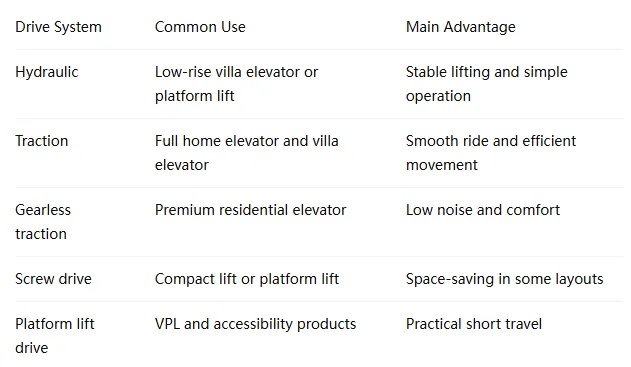
Hydraulic, Traction, and Gearless Systems: Which Drive Works Better?
Different lift models use different drive systems. A hydraulic lift uses oil pressure to move the cabin or platform. A traction elevator uses a motor, ropes or belts, and often a counterweight. A gearless traction system can provide quiet operation and smooth travel, which is useful for high-end villa projects.
A plate-forme élévatricemay use screw, hydraulic, or other compact drive designs depending on the product. A traction home elevator is usually better for premium full-floor movement, while a hydraulic system may fit certain low-rise residential lift needs. The best drive system depends on travel height, load, noise expectations, space requirements, and maintenance access.
The smart question is not “Which drive is always best?” The smart question is: “Which drive system fits this villa, this user, and this project?” A professional supplier should help buyers compare options clearly.
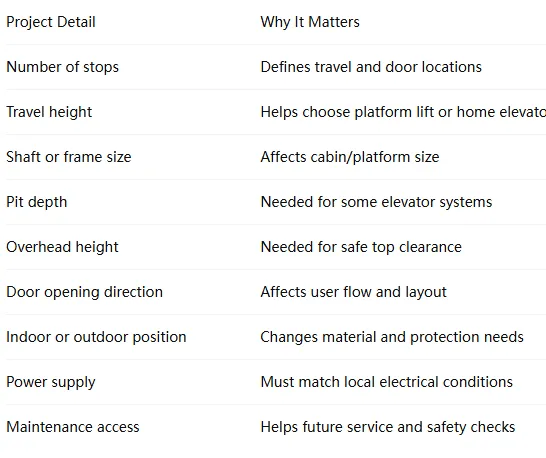
How Much Space Does a Villa Lift Need?
A villa lift needs safe space for the platform or cabin, door opening, guide system, support structure, control equipment, and user access. A platform lift may have a compact footprint, but it still needs landings and clear entry space. A home elevator may need an elevator shaft, hoistway, pit, overhead space, and sometimes a machine room.
Some platform lifts don’t require a deep pit or large machine room, depending on design. Some residential elevators are designed specifically for private homes with limited space. But buyers should never assume that every lift can fit every home. Accurate drawings are essential.
Basic space planning table:
For homes with limited space, a vertical platform lift or compact house elevator may be ideal for short access. For a luxury villa with several floors, a customized home elevator is usually the better long-term solution.
What Customization Options Matter for Luxury Villa Elevator Projects?
Customization is where a villa elevator becomes different from a basic accessibility lift. High-end homeowners care about appearance. Architects care about space and visual harmony. Contractors care about installation. Distributors care about product choice. All of them need a supplier that can customize.
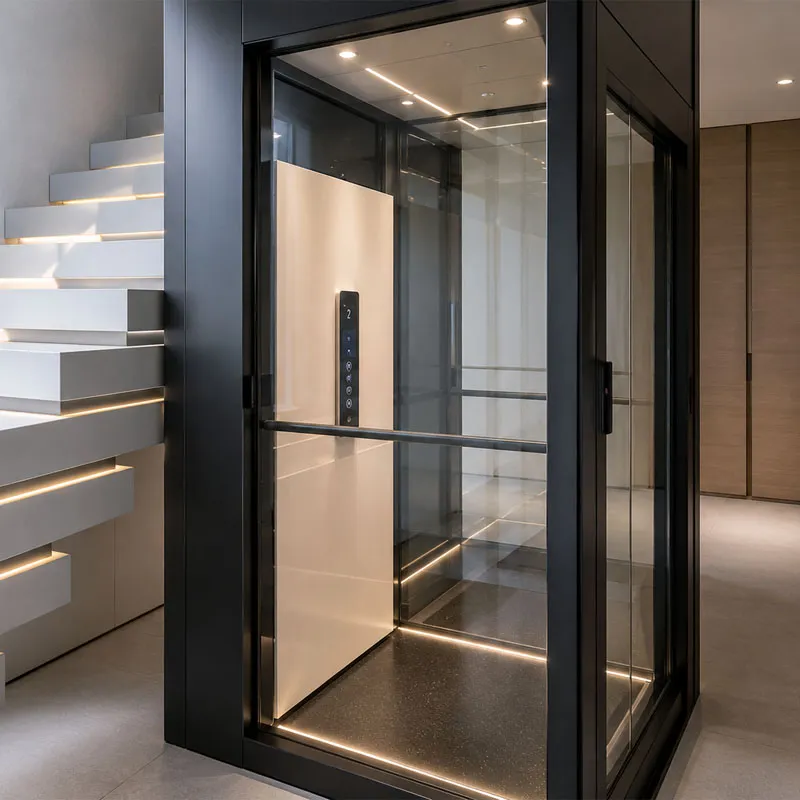
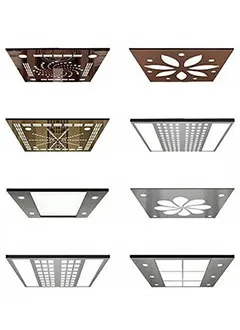
A villa elevator can include panoramic glass, hairline stainless steel, mirror panels, warm wood grain finishes, soft lighting, decorative ceilings, custom control panels, and different door styles. The elevator can be designed to blend with the staircase, atrium, living room, or private lobby.
Useful customization options include:
Cabin or platform dimensions
Glass shaft or enclosed structure
Panoramic cabin design
Stainless steel or decorative panels
Handrail style
Floor material
Ceiling and lighting
Button and control panel design
Door opening direction
Automatic or manual door options
Indoor and outdoor finishes
OEM/ODM branding for distributors
Elevatorsare designed not only to move people. In a villa, they also express taste. A good elevator seamlessly fits the home environment. It should look intentional, not added later.
Can a Platform Elevator Be Installed Indoors or Outdoors?
Yes, a platform elevator or vertical platform lift can often be installed indoors or outdoors, depending on design, weather protection, structure, and local regulations. Outdoor applications may need stronger anti-rust materials, weather protection, drainage planning, and suitable electrical protection.
Indoor installation is often easier to control because the lift is protected from rain, snow, sun, dust, and temperature changes. Outdoor installation can be useful for entrance accessibility, garden-level access, or garage connection. Each option needs careful site review.
A platform lift can be cost-effective for a short outdoor rise. A home or commercial elevator may be better when the building needs more frequent use, higher comfort, or a more finished design.
How Should B2B Buyers Compare Cost and Installation?
Cost and installation depend on lift type, travel height, load capacity, cabin or platform size, enclosure, drive system, door style, finishes, site condition, local code, shipping, and after-sales support. A simple platform lift may cost less than a full home elevator. But the lowest price is not always the lowest project cost.
B2B buyers should compare the full cost picture. This includes purchase price, installation work, building changes, shipping, maintenance, spare parts, downtime risk, and user experience. A cheap lift that creates noise, service issues, or design problems can hurt the buyer’s local reputation.
Cost comparison factors:
For developers and distributors, the goal is not only to buy a lift. The goal is to offer the right elevator solution for the customer’s villa, budget, and future use.
What Certified Safety Features Should a Residential Lift Include?
Certified safety is critical for every residential lift. Buyers should ask for safety features, technical documents, installation guidance, and compliance support. Local rules differ by country, so final approval should always be confirmed with local authorities and qualified professionals.
Important safety features may include emergency stop, emergency lowering, overload protection, door lock protection, anti-fall protection, limit switches, alarm system, backup power option, light curtain, safety edge, and reliable control logic. For home elevators, door gap safety is especially important.
Safety checklist:
Stable lifting and stopping
Accurate floor leveling
Safe door or gate lock
Emergency lowering
Overload protection
Anti-fall protection
Clear user controls
Easy maintenance access
Safe electrical system
Installation and maintenance manual
Local compliance document support
For B2B buyers, safety is also a business issue. A reliable lift protects the end user and protects your brand. Jiade treats safety, operational stability, and drive system reliability as core requirements for every villa elevator solution.
Why Choose Jiade for Platform Lift and Villa Elevator Solutions?
Jiade (Shandong) Elevator Co., Ltd.is a professional elevator manufacturer specializing in the research, development, manufacturing, and sales of high-end home elevators and villa elevators. We serve overseas B2B buyers in Europe, North America, the Middle East, Australia, and selected emerging markets.
Our customers include villa and luxury residential developers, home elevator distributors and agents, construction contractors, architects, interior design studios, and engineering companies. They need more than standard products. They need safe equipment, flexible dimensions, attractive finishes, OEM/ODM support, and long-term cooperation.
Jiade can support:
Platform lift solutions
Vertical platform lift options
Hydraulic villa elevator systems
Traction home elevator solutions
Customized villa elevator cabins
Glass and panoramic designs
Accessibility solutions for wheelchair users
Residential use project support
Factory-direct supply
Export packaging and technical documents
Long-term spare parts and after-sales cooperation
We do not compete only on low price. We focus on product safety, stable operation, drive system reliability, customization, and complete home elevator solutions. For serious B2B buyers, that is where long-term value begins.
FAQ
What is a platform villa elevator?
A plate-forme villa ascenseur is a lift solution used in villas or private homes. It may refer to a platform lift, vertical platform lift, platform elevator, or compact home elevator designed for accessibility, wheelchair use, or movement between floors.
Is a platform lift suitable for wheelchair users?
Yes. A platform lift is often used as a wheelchair lift for short vertical travel. Buyers should check platform size, load capacity, safety gates, landing space, control height, and local accessibility rules before ordering.
Is a platform lift better than a home elevator?
A platform lift is better for short travel, limited space, and basic accessibility. A home elevator is better for multiple floors, better comfort, luxury design, and long-term residential use. The right choice depends on the villa layout and user needs.
Can a platform lift be installed outdoors?
Yes, many platform lift solutions can be installed outdoors if the design supports outdoor use. Outdoor lifts need weather protection, anti-rust materials, drainage planning, and safe electrical protection.
Does a villa elevator need a machine room?
Some villa elevator systems need a machine room, while others use compact or machine-room-less designs. The need depends on the drive system, travel height, shaft design, and maintenance requirements.
What is the difference between a stair lift and a vertical platform lift?
A stair lift carries a seated user along a staircase. A vertical platform lift moves straight up and down and can carry a wheelchair user on a platform. A stair lift may work for one seated user, while a VPL is often better for wheelchair accessibility.

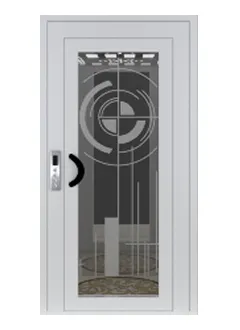
 Personnaliser la commandeType de traction Villa ElevatorAscenseur domestique à traction : Pas de salle des machines, ce qui permet de réduire les coûts. Utilise un contrepoids/un portique, s'adapte aux types de portes de la maison. Entraînement VVVF pour un déplacement en douceur
 French
 English
 German
 Russian
 Spanish
 Portuguese
 Dutch
 Arabic
 Czech
 Japanese
 Korean