Un ascensor residencial hidráulico para chalés utiliza cilindros, bombas y válvulas de control de alta gama. Su válvula proporcional de alta precisión tiene una regulación de velocidad suave, estable y continua.
Ascensor doméstico de tracción: Sin cuarto de máquinas, ahorra costes. Utiliza contrapeso/estilo de pórtico, se adapta a los tipos de puertas de casa. Accionamiento VVVF para un desplazamiento suave
Jiade (Shandong) Elevator Co., Ltd. Technical Team | JDRK Product Team | Published: August 24, 2026
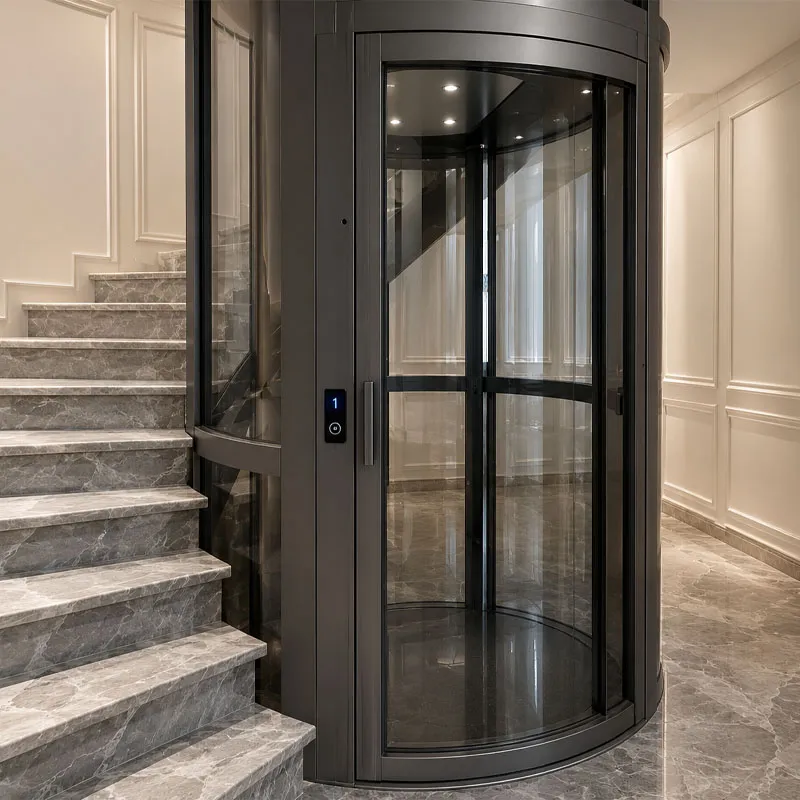
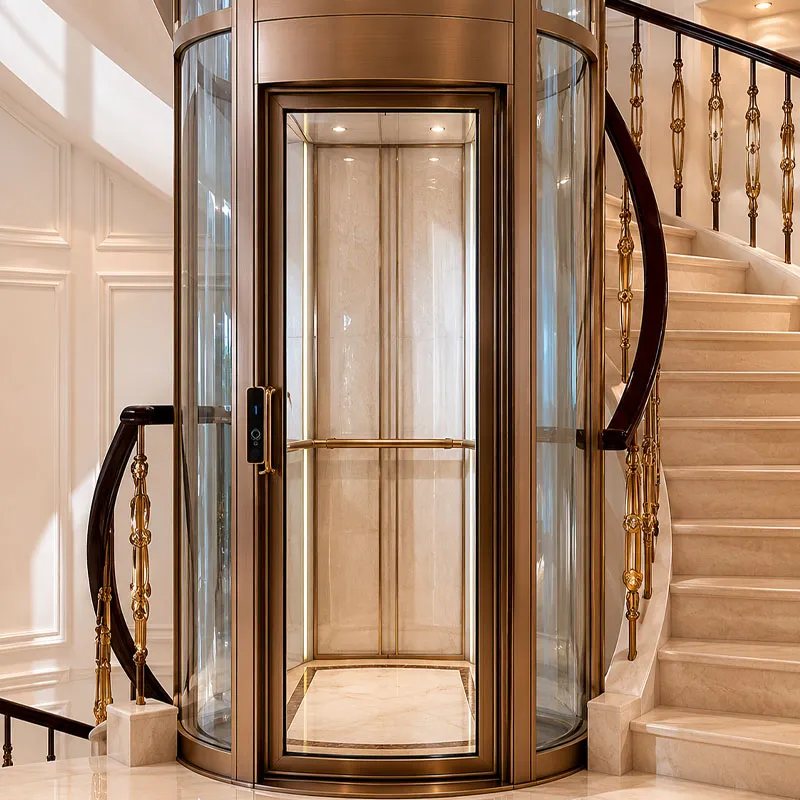
A round glass home elevator uses a curved, typically 360° transparent cabin instead of the flat-panel rectangular glass most residential lifts use. It’s a design choice as much as a technical one, and it changes shaft geometry, fabrication cost, and finish options compared with a standard cabin.
What Makes an Elevator “Round”
The defining feature is the cabin shape, not the drive mechanism underneath it. A round or panoramic glass cabin curves continuously around the passenger space rather than joining flat glass panels at corners, which is what gives it the uninterrupted view most buyers are actually after. The traction or hydraulic system driving the cabin up and down is unrelated to whether the cabin itself is round — JDRK’s panoramic round glass option is built on its traction platform, covered below.
Why High-End Homes Choose the Round Cabin Format
A spiral or curved staircase, a double-height atrium, or a classical interior with ornate detailing tends to make a rectangular glass box look structurally out of place. A round cabin reads as a design object inside the space rather than mechanical equipment bolted into it, which is the main reason this format shows up disproportionately in architecturally distinctive homes rather than standard tract housing.
How JDRK’s Traction Villa Elevator Delivers a Round Glass Cabin
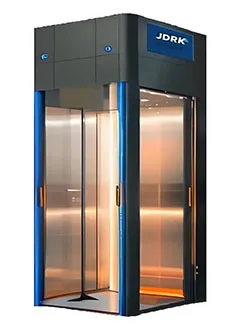
The panoramic round glass finish is one of the cabin style options on JDRK’s Traction Type Villa Elevator line, sitting alongside minimalist and other finish variants on the same underlying drive system:
The drive is a permanent-magnet synchronous machine with a polyurethane steel-belt, mounted in a machine-room-less backpack or gantry configuration — the round cabin doesn’t require a different drive type.
Standard 220V single-phase power applies, with total consumption around 1.5 kW, the same as JDRK’s other traction configurations.
A built-in UPS with ARD auto-leveling handles power interruptions mid-ride, regardless of cabin shape.
The belt is lubrication-free and rated for 2–3 times the service life of traditional steel wire rope.
The Trade-off Round Cabins Don’t Advertise
A curved glass cabin is more complex to fabricate than flat panels joined at corners, and that complexity is where the cost difference between a round and rectangular cabin actually lives — not in the drive system, which is identical either way. The other point worth flagging before committing to a round design: a circular cabin inscribed inside a shaft doesn’t use the corners of that shaft the way a rectangular cabin does, so a round configuration can ask for more overall shaft footprint to deliver the same usable interior space. That’s a geometry question to confirm against your specific shaft dimensions, not a fixed rule.
Cabin Style Options Compared
Panoramic Round Glass
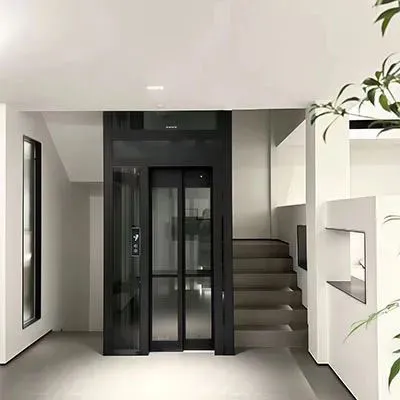
Minimalist
Cabin shape
Curved, up to 360° transparent
Flat-panel, rectangular
Visual effect
Uninterrupted view, no corner joints
Clean lines, understated finish
Typical setting
Atriums, spiral staircases, formal interiors
Contemporary or space-constrained retrofits
Shaft footprint efficiency
Lower — circular geometry inside a shaft leaves unused corner space
Higher — cabin corners align with shaft corners
Frame finish options
Gold-frame and other accent finishes available
Multiple finish variants
Pricing
JDRKdoesn’t publish pricing for the round glass configuration specifically, or for the traction line generally — every product page routes to a quote request. Given that a curved cabin’s fabrication cost is the main variable separating it from a standard finish, a quote request should specify the round glass option by name rather than assuming it falls under a generic traction-line price range.
FAQ
Q: Does a round glass elevator need a different drive system than a standard one?
A: No — JDRK’s panoramic roundglass finish runs on the same permanent-magnet synchronous traction drive as its other cabin styles. The cabin shape is a finish option, not a different mechanism.
Q: Does a round cabin need a bigger shaft than a rectangular one?
A: Often yes, for the same usable interior space, since a circular cabin doesn’t use a shaft’s corner space the way a rectangular cabin does. Confirm this against your actual shaft dimensions before finalizing a design.
Q: What finish options come with the round glass style?
A: Gold-frame and other accent finishes are available alongside the panoramic glass itself, in addition to JDRK’s other cabin style variants.
Q: Is a round glass cabin more expensive than a standard one?
A: JDRK doesn’t publish a price difference, but curved glass is generally more complex to fabricate than flat panels, which is where any cost gap would come from. Request a quote specifying the round glass option for an accurate number.
If you’re weighing a round cabin against your atrium or staircase layout, JDRK’s team can confirm shaft feasibility before you commit to the design.

 Personalizar pedidoTipo de tracción Villa AscensorAscensor doméstico de tracción: Sin cuarto de máquinas, ahorra costes. Utiliza contrapeso/estilo de pórtico, se adapta a los tipos de puertas de casa. Accionamiento VVVF para un desplazamiento suave
 Spanish
 English
 French
 German
 Russian
 Portuguese
 Dutch
 Arabic
 Czech
 Japanese
 Korean