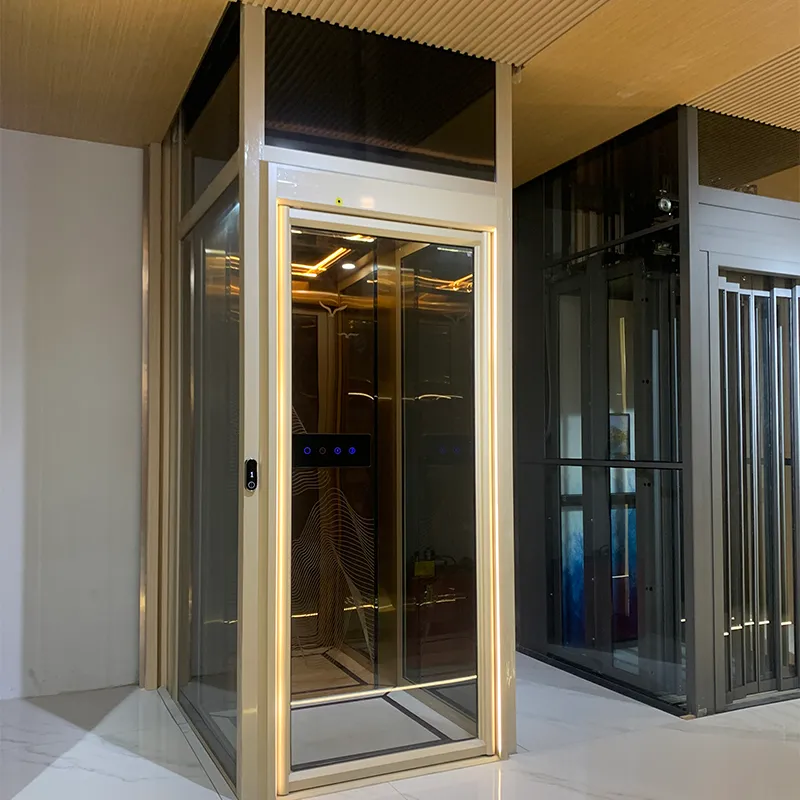
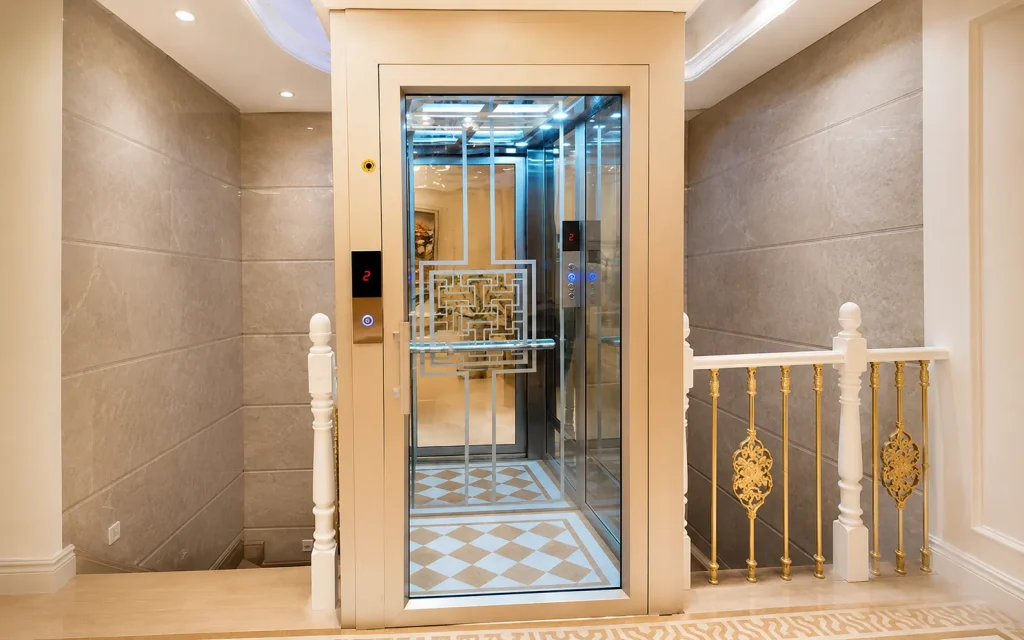
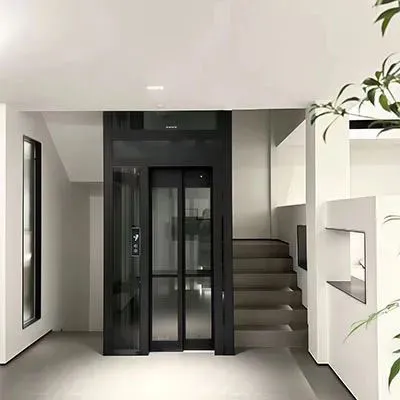
Ein hydraulisch angetriebener Wohnaufzug für eine Villa verwendet hochwertige Zylinder, Pumpen und Steuerventile. Das hochpräzise Proportionalventil sorgt für eine reibungslose, stabile und stufenlose Geschwindigkeitsregelung.
Hydraulic Home Villa Elevator: A Practical Guide to Choosing a Custom Home Lift
Stairs can become a daily problem in a beautiful villa. They limit comfort, reduce access, and make future living harder. A hydraulic home villa elevator solves this by adding a safe, smooth, and stylish lift for home use.
A hydraulic home elevator is a private residential elevator designed for villas, duplex homes, and small houses. It uses a hydraulic drive system to move the elevator cabin smoothly between floors. It is ideal for homeowners, developers, architects, and distributors who need a safe, customizable, space-saving, and elegant home lift solution.
What Is a Hydraulic Home Villa Elevator?
A hydraulic home villa elevator is a private elevator made for villas, duplex homes, townhouses, and other low-rise residential buildings. Unlike a public passenger elevator in a shopping mall or office tower, this type of home elevator focuses on comfort, quiet movement, compact size, and design harmony with the home.
For a residential villa, the elevator is not only a transport tool. It becomes part of the interior. A glass panoramic elevator can make a luxury home feel more open. A compact indoor small elevator can help a family move between floors without changing the house layout too much.
In simple terms, a hydraulic home lift is designed for people who want safe vertical movement inside a private home. It can support elderly family members, children, wheelchair users, and daily household needs. For developers and contractors, it also adds value to high-end residential projects.
Why Choose a Home Elevator for Your Villa or Residential House?
A Hausaufzug improves daily living. Many families install a lift because stairs are tiring. Some choose a residential elevator because they want to prepare the home for aging in place. AARP advises homeowners to focus on difficult areas such as stairs when planning home changes for long-term comfort.
For villas and luxury houses, the benefit is also visual. A well-designed house elevator can match marble floors, glass walls, wooden panels, metal trim, or modern minimalist interiors. Instead of looking like a medical device, the lift elevator can become a design feature.
For B2B buyers, such as developers, architects, distributors, and engineering companies, a home lift gives the project a stronger selling point. In mid- to high-end markets, buyers often ask about safety, quiet operation, appearance, warranty, and long-term service—not only lift price.
How Does a Hydraulic Home Lift Work?
A hydraulic home lift uses a hydraulic drive system. In simple words, oil pressure helps move the elevator cabin up and down. This makes the elevator stable, smooth, and suitable for low-rise homes. A hydraulic elevator is often used in villas because it can provide strong lifting power without needing a large machine room.
Compared with some traditional elevators, a hydraulic system can be easier to fit into certain villa layouts. It can work well for two to five floors, depending on the design. For a small home, a compact hydraulic home elevator may be planned with a smaller hoistway and simple landing structure.
The key parts usually include the elevator cabin, guide rails, controller, hydraulic drive unit, doors, safety system, and optional decorative finishes. A reliable manufacturer should match the elevator hydraulic system with the building height, load, travel distance, and expected daily use.
Is a Small Hydraulic Lift Suitable for a 1-2 Person Villa?
Yes. A small hydraulic lift can be suitable for a 1-2 person villa, especially when the building has limited space. Many homeowners do not need a large passenger elevator lift. They need a safe, compact, and comfortable small elevator for daily movement.
A mini home elevator or small home lift can be useful in a narrow townhouse, private villa, or small house. It may carry one person, two people, or a wheelchair user depending on the selected model and cabin size. For homes with elderly residents, this can be more practical than a stair lift because it offers full-floor access and better comfort.
Still, size should not be chosen only by feeling. Before installing a home elevator, buyers should check the shaft space, pit depth, top height, door opening, power supply, and local code needs. A professional supplier can help choose the right elevator models based on project drawings.
What Safety Features Should a Residential Elevator Include?
Safety should be the first concern for every residential elevator. A good elevator for your home should include emergency stop, door lock protection, overload protection, backup lowering, anti-fall protection, lighting, alarm system, and smooth leveling. In simple words, elevators include safety features that protect people before, during, and after travel.
The U.S. Access Board notes that elevators, including private residence elevators, are tied to ASME A17.1 safety code requirements in accessibility guidance. ANSI also states that ASME A17.1/CSA B44 covers design, construction, installation, operation, testing, inspection, maintenance, alteration, and repair of elevators and related equipment.
For B2B buyers, safety is also about documentation. Ask the factory about test reports, electrical safety, door system quality, controller reliability, and installation guidance. A reliable residential elevator supplier should support both product safety and project compliance.
How Much Does Home Elevator Cost?
Home elevator cost depends on many factors. There is no single price for every project because each home elevator may need different size, travel height, cabin finish, door type, control system, and installation plan. The final lift price is usually based on the complete solution, not only the machine.
Common factors that affect elevator prices include:
Number of floors and travel height
Cabin size and load capacity
Hydraulic, traction, or platform drive system
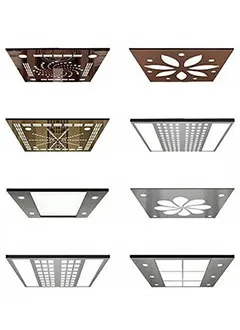
Glass, stainless steel, wood, or painted cabin finish
Hoistway or shaftless structure
Door type and landing door quantity
Local installation requirements
Shipping, packaging, and after-sales service
A cheap villa elevator may reduce upfront cost, but it can also reduce long-term value if the design is weak. For developers and distributors, a slightly better domestic elevator package can improve customer satisfaction, reduce complaints, and support repeat orders.
What Should B2B Buyers Check Before Installing a Home Elevator?
Before installing a Hausaufzug, B2B buyers should check both the building and the supplier. A beautiful lift residential house design is not enough. The elevator must fit the real site.
Important project checks include:
Building drawings and floor height
Elevator shaft or hoistway size
Pit depth and top clearance
Power supply and wiring route
Door opening direction
Cabin size for users or wheelchair access
Local inspection and code needs
Packaging and shipping method
Installation manual and video support
Spare parts and after-sales response
The U.S. Access Board’s elevator and platform lift guidance also notes that private residence elevators are used within residential dwelling units, while accessibility rules vary by facility type. This is why project buyers should always confirm local rules before placing bulk orders.
If the project is for a developer, distributor, or engineering company, choose a factory that can review drawings and suggest the right elevator for home use. Good pre-sales support can prevent costly mistakes.
Why Work With a Professional Home Elevator Manufacturing Factory?
Working with a professional home elevator manufacturing factory gives B2B buyers better control over quality, cost, design, and delivery. Jiade (Shandong) Elevator Co., Ltd. focuses on high-end home elevators and villa elevators, including hydraulic, traction, panoramic, and platform solutions for overseas project buyers.
For distributors and agents, factory-direct supply means better communication. For contractors and architects, it means better technical support. For villa developers, it means more flexible customizable design choices and stable project delivery.
A professional factory should support:
Product selection for different villa layouts
OEM/ODM cooperation
Cabin and appearance customization
Safe drive system matching
Export packaging
Installation documents
Long-term spare parts supply
Technical support for project teams
This matters because a home villa elevator is not a simple online product. It is a project-based solution. Buyers need a partner, not only a seller.
What Makes a Hydraulic Home Villa Elevator Ideal for Modern Homes?
A hydraulic home villa elevatoris ideal for homes because it offers comfort, safety, and design flexibility. It helps families stay in the home longer and makes daily movement easier. It is also ideal for homes where stairs create inconvenience.
For a high-end residential building, a private elevator can improve both lifestyle and property appeal. In some projects, the elevator is designed from the start. In others, it is added during renovation. Either way, planning matters.
A good lift villa solution should feel smooth and quiet, match the interior, and serve the family for many years. For B2B buyers, this means choosing a supplier that understands both engineering and design.
FAQs
What is the best elevator for a villa?
The best elevator for a villa depends on space, travel height, load, style, and budget. A hydraulic home elevator is a strong choice for low-rise villas that need smooth travel and stable performance. A traction model may suit taller or more energy-focused projects.
Can I install a home elevator in a small house?
Yes. A home elevator small model can be used in a small house if the structure allows it. Buyers should check shaft space, pit depth, top clearance, and door position before choosing the model.
Is a hydraulic home lift safe?
Yes, a properly designed hydraulic home lift can be safe when it includes door locks, emergency lowering, overload protection, alarm systems, and anti-fall protection. Always choose a supplier that follows recognized elevator safety practices and supports installation guidance.
What is the difference between a home lift and a stair lift?
A home lift moves vertically between floors in a cabin or platform. A stair lift moves along the staircase using a chair. A home lift is usually better for wheelchair users, luxury villas, and full-floor access.
Can I customize the elevator design?
Yes. Many villa buyers can customize cabin walls, doors, lighting, floors, control panels, and glass structure. A custom elevator design helps match the home’s interior style.
Is a hydraulic cargo lift the same as a home elevator?
No. A hydraulic cargo lift or cargo lift is mainly used for goods. A passenger elevator or residential home elevator is designed for people and should include proper comfort and safety systems.

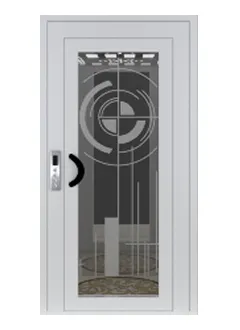
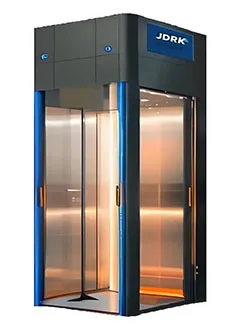
 Bestellung personalisierenTraktionsart Villa AufzugTraktions-Heimaufzug: Kein Maschinenraum, spart Kosten. Verwendet Gegengewicht/Gantry-Stil, passt zu Haustür-Typen. VVVF-Antrieb für sanfte Fahrt
 German
 English
 French
 Russian
 Spanish
 Portuguese
 Dutch
 Arabic
 Czech
 Japanese
 Korean