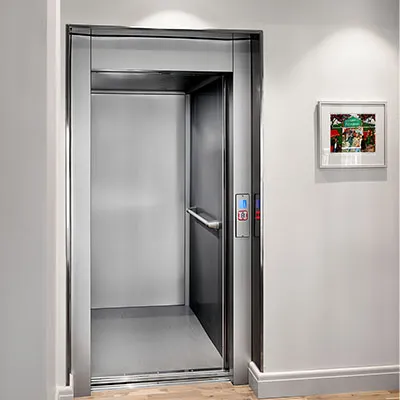
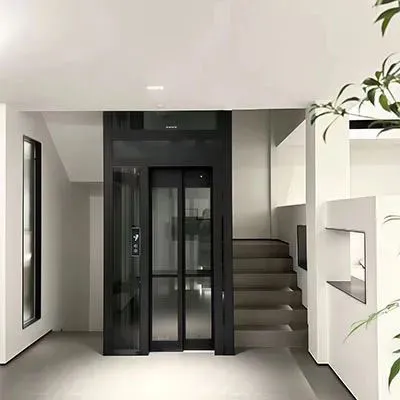
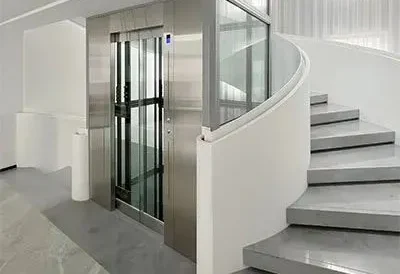
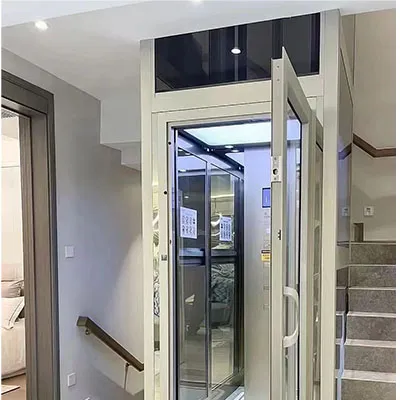
Ein hydraulisch angetriebener Wohnaufzug für eine Villa verwendet hochwertige Zylinder, Pumpen und Steuerventile. Das hochpräzise Proportionalventil sorgt für eine reibungslose, stabile und stufenlose Geschwindigkeitsregelung.
Hydraulic and Traction Home Villa Elevator: Gantry Frame Guide for B2B Buyers
Choosing the wrong home elevator can create noise, space problems, safety concerns, and after-sales pressure. For villa projects, one small design mistake may affect the whole building. A well-planned hydraulic or traction home villa elevator gives buyers safer movement, better comfort, and long-term project value.
A hydraulic and traction home villa elevator is a residential elevator designed for private houses, villas, and luxury homes. It can use a hydraulic drive, gearless traction drive, or gantry frame traction structure to move people safely between 2-5 floors. For B2B buyers, the key is matching the elevator structure, load, door style, and customized design to the project.
What Is a Hydraulic and Traction Home Villa Elevator?
A home villa elevator is a private elevator designed for residential use. It is different from a large commercial passenger elevator because it focuses on comfort, space saving, low noise, and beauty. It is often used in a private house, residential home, luxury villa, townhouse, duplex apartment, or small residential elevator project.
A hydraulic home elevator uses oil pressure to lift the elevator car. A traction home elevator uses a traction machine, wire rope, traction wheel, counterweight, and guide rail to move the cabin. A gantry frame traction elevator uses a special gantry frame type elevator structure to support compact residential layouts where a traditional elevator shaft may be difficult.
For Jiade (Shandong) Elevator Co., Ltd., a villa elevator is not just a lift elevator. It is part of the home. Our customers are usually villa developers, home elevator distributors, architects, interior design studios, contractors, and engineering companies. They need safe, elegant, and reliable elevator products for long-term cooperation.
Why Do Villa Projects Choose a Traction Home Elevator?
A traction home elevator is popular in modern villa projects because it offers smooth operation, low energy consumption, and stable lifting. For many mid- to high-end homes, buyers want the elevator to feel quiet and natural. They do not want shaking. They do not want heavy noise. They want a comfortable passenger lift for daily vertical transportation.
A traction elevator can be suitable for 2-5 floors, especially when the project needs a clean installation layout and better energy saving. The permanent magnet synchronous motor is often used in a gearless traction system. This can reduce mechanical wear, improve running comfort, and make the elevator more suitable for designed for residential use projects.
How Does a Gantry Frame Traction Elevator Work?
A gantry frame traction elevator uses a supporting frame structure to carry the traction system. In simple words, the gantry frame works like a strong body for the elevator. It helps hold key parts such as the traction machine, guide rail, counterweight, and elevator car.
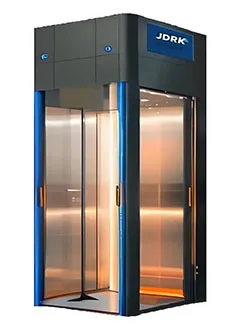
This type of gantry frame design can be useful for villa projects with special building conditions. Some homes do not have a standard hoistway. Some projects need a compact lift residential solution. Some interior designers want a panoramic or sightseeing elevator effect with glass. A gantry frame can help create a more flexible structure.
Simple working chart:
User presses elevator button
↓
Control system receives the command
↓
Traction machine starts smoothly
↓
Traction wheel moves steel wire rope
↓
Counterweight balances the elevator car
↓
Cabin reaches the selected floor
↓
Automatic door opens safely
The value of a gantry frame traction structure is not only technical. It also helps project communication. When contractors, architects, and villa developers understand the elevator structure early, they can plan the elevator shaft, decoration, door styles, and control panels more clearly.
Hydraulic or Traction: Which Drive System Fits Residential Use?
Many buyers ask whether they should choose a hydraulic elevator or a traction elevator. The answer depends on the building, travel height, budget, comfort needs, and local market preference. Both hydraulic and traction systems can work well when designed and installed correctly.
A hydraulic home elevator is often chosen for stable lifting and simple structure. It can be a good option for low-rise residential use. A hydraulic lift may also fit projects that prefer strong lifting performance and flexible layout. A hydraulic home lift or hydraulic home elevator may be easier to explain to homeowners because the working principle feels simple.
A traction elevator is often chosen for low noise, smooth operation, energy saving, and modern villa design. A lift gearless system with permanent magnet technology can be attractive in the high-end residential elevator market.
What Safety Features Should a Passenger Elevator Include?
A Hausaufzug is a passenger elevator used by families. That means safety must come first. A beautiful cabin is not enough. The elevator must have safe doors, stable controls, emergency functions, and reliable mechanical parts.
Important safety features may include emergency stop, emergency lowering, overload protection, door lock protection, anti-fall protection, limit switches, light curtain, alarm system, intercom, backup power option, and safe leveling. The elevator car should stop accurately at each floor. The automatic door should open and close smoothly.
For villa elevator home projects, door safety is very important. International safety discussions often focus on gaps between the hoistway door and car door. Young children may face serious risk if the gap is too large. This is why door structure, installation accuracy, and maintenance checks must be treated as core safety work, not small details.
Professional buyers should also check whether the supplier can provide technical documents, installation guidance, and safety configuration details. In Europe, North America, the Middle East, Australia, and other markets, local rules may differ. The final design should always follow local elevator codes and inspection requirements.
What Customized Design Options Matter for a Villa Elevator?
In luxury homes, the elevator should match the interior design. A standard cabin may work in a public building elevator, but a villa elevator needs beauty. It should feel like part of the house.
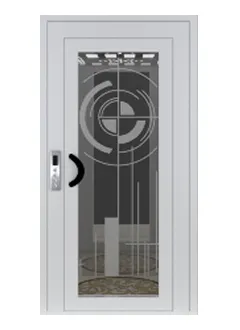
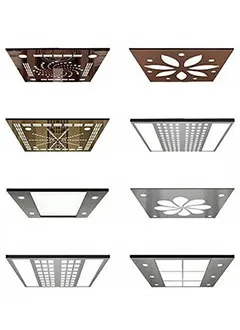
Common customized design options include cabin size, door styles, glass panels, panoramic cabin, hairline stainless steel, mirror stainless steel, wood grain panels, ceiling design, LED lighting, handrail, floor material, and control panels. Buyers can also customize the outside shaft, especially for glass sightseeing elevator designs.
Popular style directions include:
Modern villa style: clean lines, soft lighting, simple colors
Architectural style: elevator design matched with stairs or atrium
For Jiade, customization is a key part of project value. We do not only sell a household elevator as a single product. We help B2B partners create a complete home elevator solution that fits the buyer’s building, market, and brand image.
How Should B2B Buyers Choose a Home Elevator Supplier?
A good Hausaufzug supplier should offer more than an elevator price. In the B2B market, price is only one part of the decision. Buyers also need stable production, technical support, customization ability, export experience, and after-sales cooperation.
Professional buyers should check whether the supplier can provide hydraulic elevator, traction elevator, platform lift, private elevator, and customized villa elevator solutions. A strong supplier should support OEM/ODM cooperation, project drawings, packaging, spare parts, and long-term product updates.
Jiade (Shandong) Elevator Co., Ltd. is a professional elevator manufacturer focused on high-end home elevators and villa elevators. Our overseas customers are mainly developers, distributors, agents, contractors, architects, interior designers, and engineering companies. We aim to be a long-term partner, not a one-time supplier.
What Should Contractors Know Before Installation?
Contractors should join the elevator planning process early. If the building elevator space is designed too late, the project may face changes, delays, and extra cost. This is common in villa renovation and custom luxury home projects.
Before installation, contractors should confirm the shaft, pit, overhead, floor height, guide rail position, landing door size, power supply, and decoration interface. They should also confirm whether the elevator needs a machine room or can use a compact machine-room-less layout. The hydraulic cargo area or cargo lifts should not be confused with a passenger elevator for residential use. Safety standards and user experience are different.
Basic contractor checklist:
Confirm all dimensions before production
Check the elevator shaft or gantry frame space
Confirm automatic door direction and landing layout
Plan delivery route to the site
Protect finished floors and walls during installation
Reserve maintenance access
Coordinate with local inspection team
Follow supplier installation guidance
Good installation starts with good communication. When the supplier, contractor, and designer work together, the final elevator feels natural in the home.
FAQs
Is a traction elevator better than a hydraulic elevator for a villa?
A Treibscheibenaufzug is often better for buyers who want low noise, energy saving, and smooth movement. A hydraulic elevator can also be a strong choice for low-rise homes that need stable lifting and simple structure. The best option depends on the project.
What is a gantry frame traction elevator?
A gantry frame traction elevator uses a supporting frame structure with a traction drive system. It can help villa projects that need flexible installation, compact layout, or a special elevator structure.
Is a villa elevator suitable for 2-5 floors?
Yes. Many home villa elevator projects are designed for 2-5 floors. The final design depends on travel height, load capacity, shaft size, local code, and customer comfort needs.
What load capacity is common for a home elevator?
Common residential options include 400kg and 630kg. A 400kg model may suit smaller homes. A 630kg passenger elevator can provide more cabin space and better comfort for luxury residential projects.
Can Jiade customize the villa elevator design?
Yes. Jiade can customize cabin size, glass, door styles, stainless steel finishes, lighting, handrails, control panels, and other decorative options. Customized design is important for villas and high-end residential projects.
Does a home elevator need a machine room?
Some designs may need a machine room, while others can use compact layouts. It depends on the drive system, building structure, and local requirements. Buyers should share project drawings before confirming the final plan.

 Bestellung personalisierenTraktionsart Villa AufzugTraktions-Heimaufzug: Kein Maschinenraum, spart Kosten. Verwendet Gegengewicht/Gantry-Stil, passt zu Haustür-Typen. VVVF-Antrieb für sanfte Fahrt
 German
 English
 French
 Russian
 Spanish
 Portuguese
 Dutch
 Arabic
 Czech
 Japanese
 Korean