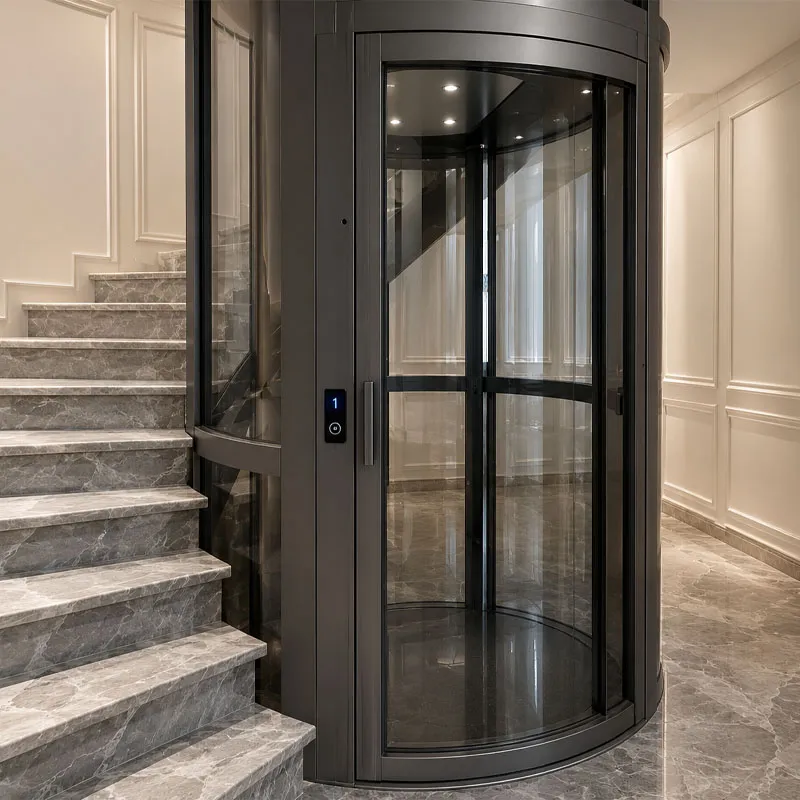
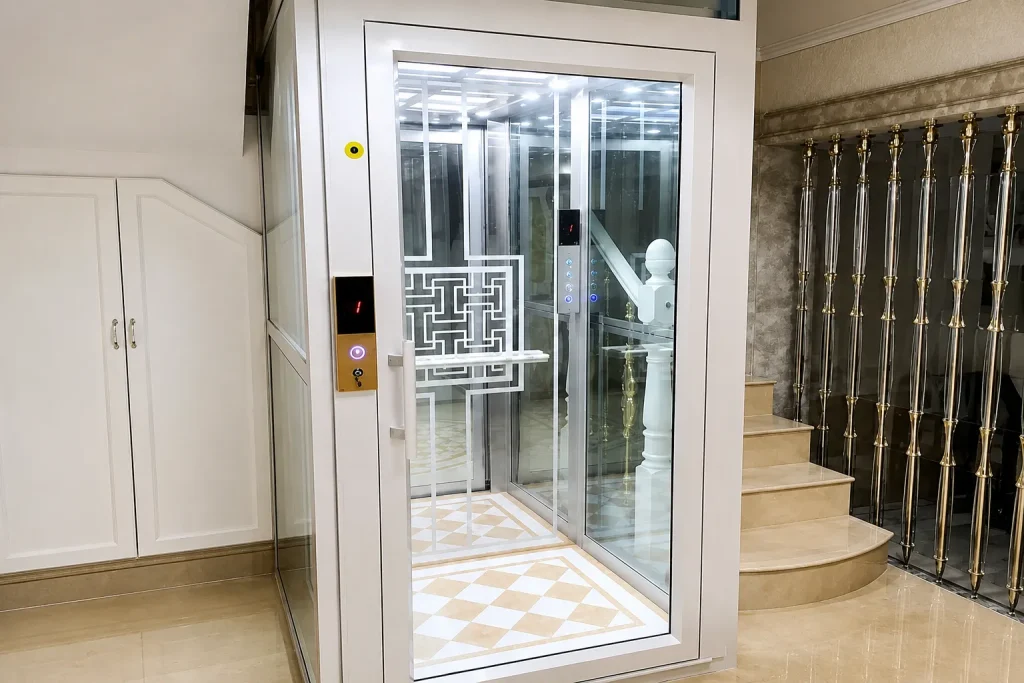
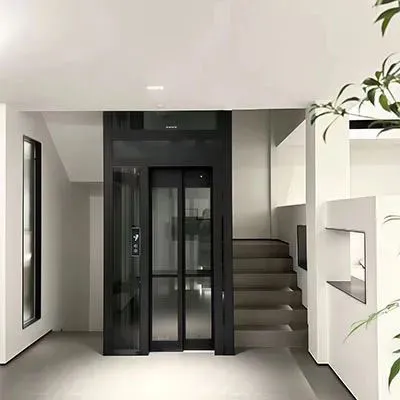
Ein hydraulisch angetriebener Wohnaufzug für eine Villa verwendet hochwertige Zylinder, Pumpen und Steuerventile. Das hochpräzise Proportionalventil sorgt für eine reibungslose, stabile und stufenlose Geschwindigkeitsregelung.
How Does a Traction Elevator Work? Full Mechanics Guide
JDRK Product Team | Jiade (Shandong) Elevator Co., Ltd. | Published September 2026
A traction elevator lifts the cabin using a motor-driven sheave at the top of the shaft, with a belt or rope running over it in friction contact — “traction” refers to that friction grip, not a hydraulic push. Five components do the actual work: the sheave, the motor, the drive controller, the suspension belt, and a backup power system for outages.
Most diagrams answering this question show a generic rope-and-counterweight system with labels that could belong to any manufacturer’s elevator from any decade. That’s fine for a general mechanics lesson, but it doesn’t tell you what’s actually inside a specific machine-room-less villa unit today. This breaks down each component against JDRK’s Traction Type Villa Elevator spec specifically, so the mechanism explanation maps to a real, buildable configuration rather than a textbook illustration.
The Traction Sheave: Where the Lifting Happens
The sheave is the grooved wheel the belt runs over. The motor spins it, friction between the belt and the sheave’s grooves does the actual lifting, and — critically — this is why it’s called an “overhead” system: the sheave sits at the top of the shaft, above the highest floor the cabin serves, rather than beneath the cabin the way a hydraulic ram does. That overhead position is true of every Treibscheibenaufzug, JDRK’s included, regardless of whether the drive unit sits inside a dedicated machine room or, as covered below, inside the shaft itself.
The Motor: Permanent-Magnet Synchronous
JDRK’s traction line uses a permanent-magnet synchronous motor connected directly to the sheave — no gearbox in between. That direct connection is what puts this configuration in the “gearless” category: the motor itself generates enough torque at low speed to drive the sheave without a mechanical reduction stage, which is a meaningfully more compact setup than the induction-motor-plus-gearbox combination older traction systems use.
The VVVF Drive: Controlling Speed and Stops
VVVF stands for variable voltage variable frequency — the controller that regulates how fast the motor spins based on where the cabin needs to go and how close it is to the target floor. Instead of running the motor at one fixed speed and mechanically braking to stop, a VVVF controller ramps speed up and down electronically, which is part of why gearless traction systems tend to produce a smoother stop than older fixed-speed designs.
The Suspension Belt: What’s Actually Carrying the Cabin
This is the component most diagrams get generic about, showing a steel wire rope by default because that’s the historical standard. JDRK’s unit uses a polyurethane belt instead — flat, wider-contact-area material running over the sheave rather than round steel cable. The company states this belt is lubrication-free and rated at roughly 2 to 3 times the service life of a conventional steel wire rope, which also removes one maintenance task (rope lubrication) that traditional traction systems require.
Counterweight: The Part That Usually Balances the Load
In a typical Treibscheibenaufzug, a counterweight travels on the opposite side of the sheave from the cabin, connected by the same belt or rope loop — its job is to offset the cabin’s weight so the motor only has to move the difference between the two, not the cabin’s full weight on every trip. That’s standard traction-elevator mechanics generally. JDRK’s published documentation for the villa line doesn’t specify counterweight configuration details for this specific product, so if counterweight sizing or shaft-space allowance for one is a project requirement, that’s a direct question for the manufacturer rather than something this guide can confirm from published specs.
Where the Machine Room Went
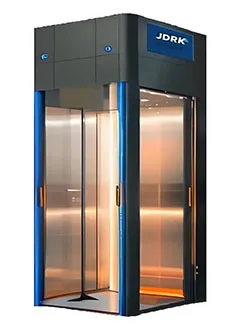
“Traction elevator machine room” is a common search precisely because, historically, the motor, gearbox, and controller for a traction system lived in a dedicated room — usually directly above the shaft. JDRK’s configuration is machine-room-less: the permanent-magnet motor mounts inside the shaft itself, in a backpack or gantry arrangement, rather than in a separate room. Compared to the machine-room-based overhead configurations still common in commercial buildings, this is the single biggest practical difference for a villa retrofit — there’s no separate room to find space for, plan structurally, or run additional wiring to.
The Backup System: UPS and ARD
JDRK’s documentation specifies a built-in UPS (uninterruptible power supply) paired with an ARD (automatic rescue device). If household power cuts out mid-ride, the UPS keeps the ARD functional long enough to auto-level the cabin to the nearest floor rather than leaving it stopped between floors. This is the specific safety mechanism published for the traction line — it’s a backup power function, distinct from the mechanical safety components (governors, door interlocks, and similar hardware) that a full elevator safety system includes but that aren’t itemized in JDRK’s current published documentation for this product.
Common Misconception: “Overhead” Means There’s Still a Room Up There
The term “overhead traction” describes where the sheave sits — at the top of the shaft — not whether there’s a room housing it. JDRK’s machine-room-less configuration is still an overhead system in the mechanical sense (the sheave is still up top, still doing the lifting the same way); what’s changed is that the motor and controller mount directly in the shaft space instead of a separate enclosed room. Conflating “overhead” with “has a machine room” is where a lot of the search confusion around this term comes from.
Pricing
None of the individual components covered here — sheave, motor, drive controller, belt, or backup system — are priced separately; JDRK quotes the Traction Type Villa Elevator as a complete configuration rather than itemizing component costs. What does affect the quote: shaft dimensions, cabin finish, and whether the installation is new construction or a retrofit. A WhatsApp message with shaft measurements gets a project-specific number faster than any generic price range would.
FAQ
Q: Does a traction elevator diagram look different for a machine-room-less system?
A: The core components — sheave, motor, belt, controller — are the same either way. What changes in a diagram is where the motor and controller sit: inside a labeled machine room box above the shaft in a traditional diagram, or inside the shaft itself (backpack/gantry mount) in a machine-room-less one like JDRK’s.
Q: Is the traction sheave the same thing as the motor?
A: No — the sheave is the grooved wheel the belt runs over; the motor is what spins it. In JDRK’s permanent-magnet synchronous configuration, the motor connects directly to the sheave with no gearbox between them.
Q: Why does JDRK use a belt instead of a wire rope?
A: The company states the polyurethane belt is lubrication-free and offers roughly 2 to 3 times the service life of a traditional steel wire rope — removing a maintenance step that rope-based systems require.
Q: What happens to the ARD if the power outage lasts a long time?
A: JDRK’s documentation covers the UPS keeping the ARD functional for auto-leveling immediately after an outage; it doesn’t publish a specific runtime duration for the UPS itself, so that figure would need direct confirmation for a project where outage duration is a specific concern.

 Bestellung personalisierenTraktionsart Villa AufzugTraktions-Heimaufzug: Kein Maschinenraum, spart Kosten. Verwendet Gegengewicht/Gantry-Stil, passt zu Haustür-Typen. VVVF-Antrieb für sanfte Fahrt
 German
 English
 French
 Russian
 Spanish
 Portuguese
 Dutch
 Arabic
 Czech
 Japanese
 Korean