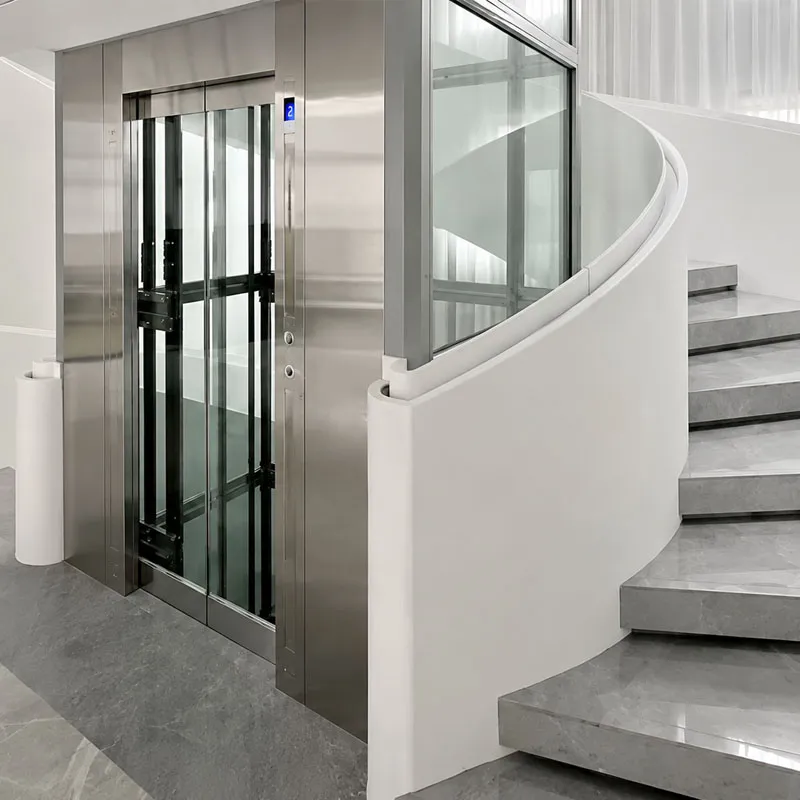
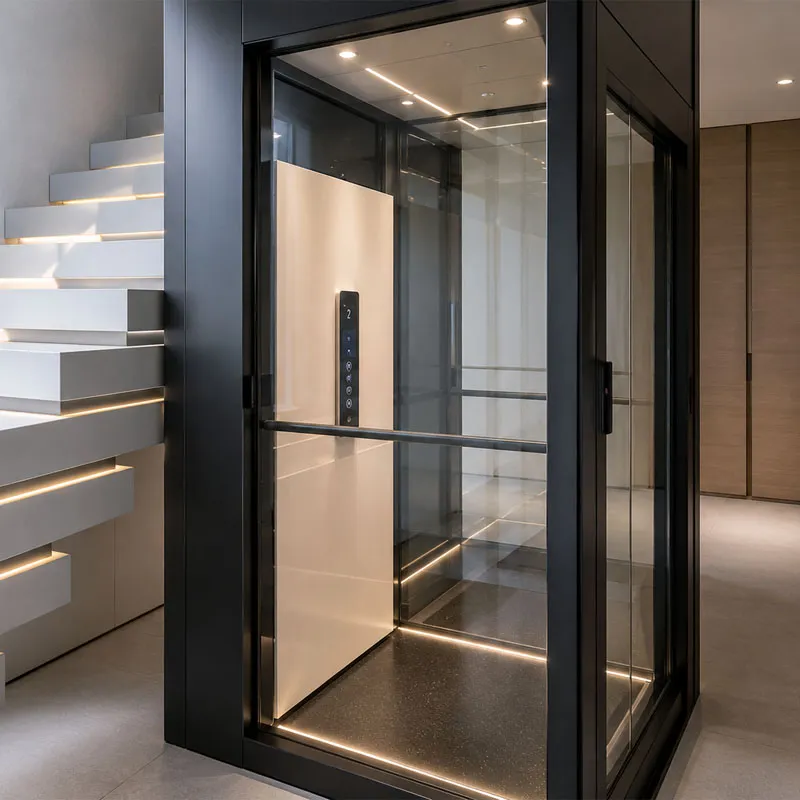
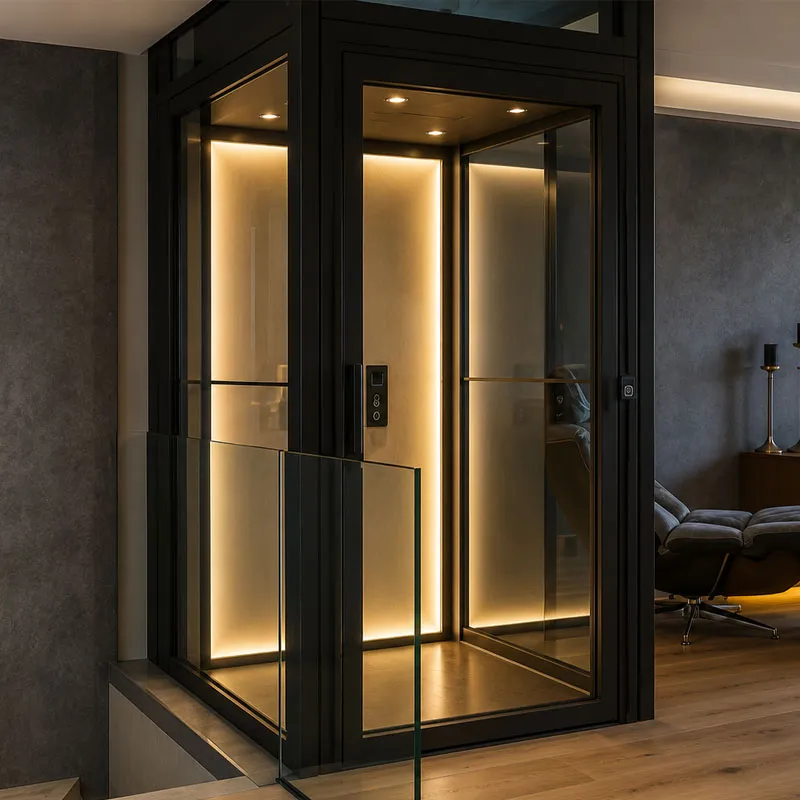
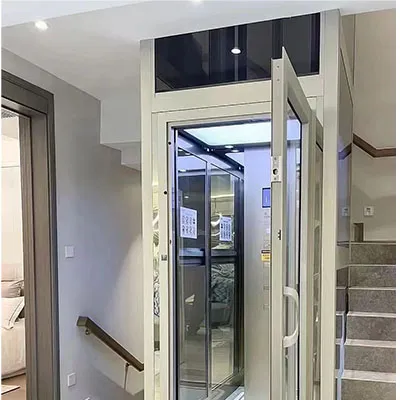
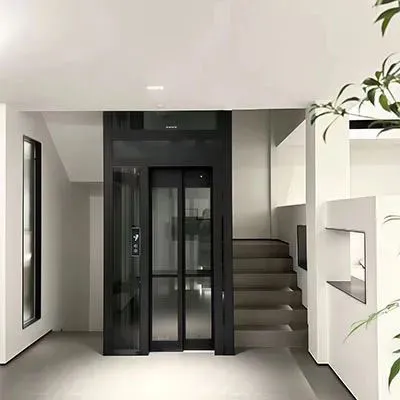
Hydraulicky poháněný obytný výtah pro vily využívá špičkové válce, čerpadla a ovládací ventily. Jeho vysoce přesný proporcionální ventil by měl mít plynulou stabilní plynulou regulaci rychlosti.
Elevator vs Platform Lift: Choosing the Right Home Elevator, Villa Elevator, and Accessibility Solution
A modern home should be easy to move through, not only beautiful to look at. This article explains how an elevator, lift, platform lift, home elevator, and vertical platform lift differ, and why the right choice can improve comfort, safety, and long-term value.
If you are a homeowner, villa developer, distributor, contractor, architect, or interior design studio, this guide is worth reading because it helps you compare real lift options before starting installation. You will learn where a villa elevator works best, when a platform lift makes more sense, and how to choose an accessibility solution that fits the building, the user, and the budget.
What Is the Difference Between an Elevator and a Lift?
The words elevator and lift are often used for the same product. In many markets, people in North America say elevator, while people in the UK and some other regions often say lift. In both cases, the product moves people or goods between levels. For a private house, buyers may call it a home elevator, home lift, or residential elevator.
A traditional elevator usually has a fully enclosed elevator car, elevator doors, guide rails, a control system, and a drive system. It often serves multiple floors and offers smooth vertical movement. A commercial elevator in an office or hotel is usually larger, faster, and designed for heavy daily use. A residential elevator is smaller and more focused on comfort, quiet operation, and matching the home environment.
For villas, the choice is not only about the name. A villa elevator must fit the building style, family needs, and available space. Some projects need a compact elevator inside the home. Others need a platform lift at the entrance or beside a split-level area.
What Is a Platform Lift and Where Is It Used?
A platform lift is a type of lift with a flat platform that moves vertically between two or more levels. It is often used for wheelchair users, elderly people, and people with limited mobility. Unlike a fully enclosed elevator, a platform lift may be open or semi-enclosed, depending on the design and local requirements.
Platform lifts are commonly used in private homes, villas, porch areas, garage entries, public buildings, and residential and commercial spaces. A porch lift can help users move from ground level to a raised entrance. An enclosed platform lift may be used indoors or outdoors when more protection is needed. In short vertical travel situations, a platform lift can be a practical and cost-effective solution.
Many platform lift solutions are selected because they require less construction than building a shaft for a traditional home elevator. This makes them attractive for renovation projects, split-level homes, and homes where space requirements are tight.
levator vs Platform Lift: Which One Is Better for Your Home?
The question of elevator vs platform depends on the home, the user, and the goal. A home elevator is usually better when the homeowner wants a premium ride, a fully enclosed elevator car, higher comfort, and better integration with the whole residence. A platform lift is often better when the main goal is accessibility, short vertical travel, and simple installation.
Item
Home Elevator
Platform Lift
Main Use
Full-home vertical transportation
Accessibility and short-distance vertical travel
Structure
Fully enclosed elevator cabin
Open, semi-enclosed, or fully enclosed platform
Best For
Multi-floor residences and luxury villas
Wheelchair users, porch access, and split-level homes
Construction
May require an elevator shaft or hoistway
Generally requires less construction work
Style
Premium, panoramic, and customizable design
Practical design with a compact footprint
Náklady
Usually higher
Often more cost-effective
Comfort
Smooth and comfortable vertical travel
Simple and direct vertical movement
For every home, the better option should match the user’s real mobility needs. If the project is a luxury home with several floors, a home elevator may be the right home elevator choice. If the project is mainly about helping wheelchair users reach an entrance or raised platform, a vertical platform lift may be better.
Why Are Home Elevators and Platform Lifts Important for Accessibility?
Home elevators and platform lifts can greatly improve accessibility. Stairs may look simple, but they can become a serious barrier for elderly family members, wheelchair users, people using a walker, or anyone recovering from injury. A lift makes movement safer and easier.
An accessibility solution is not only about medical needs. It also supports aging in place. Many homeowners want to stay in their homes for many years. A home elevator, wheelchair lift, or platform lift helps them move between levels without depending on stairs every day.
For developers and contractors, accessibility can also increase project value. A villa that includes a well-designed elevator solution may appeal to more buyers. It shows that the home is prepared for comfort, family use, and future living needs.
When Should You Choose a Home Elevator for Multiple Floors?
A home elevator is usually the better choice when the building has multiple floors and the user wants a complete vertical transportation system. It works well in villas, duplex houses, luxury homes, and custom residential projects. A home elevator can connect bedrooms, living rooms, garages, basements, and rooftop areas.
A traditional home elevator usually gives a more comfortable ride than a simple lift platform. It may include automatic elevator doors, an enclosed elevator car, soft lighting, quiet operation, backup power, and more design choices. For a high-end villa, these details matter. The elevator becomes part of the lifestyle.
A výtah ve vileis also a strong choice when the buyer wants long service life and better aesthetics. A panoramic home elevator can match modern interiors. A compact home elevator can fit smaller homes. A custom home elevatorcan support different cabin sizes, colors, materials, and finishes.
Is a Vertical Platform Lift Good for Wheelchair Users?
Yes, a vertical platform lift can be a very good choice for wheelchair users when it is designed correctly. It gives smooth vertical movement without asking the user to transfer from the wheelchair to another seat. This can make daily movement safer and more independent.
A vertical platform lift is often used for short vertical travel, such as moving from a garage to the first floor, from a garden to a terrace, or from the ground to a porch. For residential wheelchair access, the platform size, door width, control height, and turning space should be carefully checked before installation.
Every vertical platform lift should include practical safety features. These may include guard panels, non-slip flooring, safety sensors, emergency stop buttons, and safe access gates. For wheelchair users, the lift should feel simple. The controls should be easy to reach. The movement should be stable.
What Should You Know About Installation and Space Requirements?
Installation planning should begin before ordering any elevator or lift. The buyer should check travel height, floor openings, wall strength, power supply, door direction, indoor versus outdoor location, and space requirements. A poor installation plan can cause delays, extra cost, or a bad user experience.
A traditional elevator may need a full hoistway, pit, top clearance, and sometimes a machine room, depending on the model. A platform lift may need less construction, but it still requires a stable base, proper landing space, and safe user access. For split-level homes or garage entries, the lift position must allow easy entry and exit.
Before production, a professional lift manufacturer should ask for drawings, site photos, floor height, and installation details. At Jiade, we use this information to help B2B buyers compare elevator, lift, platform lift, hydraulic home elevator, and villa elevator solutions before confirming the final model.
Hydraulic, Traction, or Platform Lift: Which Drive System Fits Best?
Different lift products use different drive systems. A hydraulic lift uses fluid pressure to move the platform or elevator car. It is often valued for stable movement and strong lifting power. A traction elevator uses a motor and suspension system to move the elevator. It may suit modern villas that need smooth vertical movement and quiet operation.
A platform lift may use screw drive, hydraulic drive, or other drive methods depending on the model. The right drive system depends on travel height, load capacity, installation space, ride comfort, maintenance needs, and budget. There is no single best answer for all homes.
Drive System
Common Applications
Main Advantage
Hydraulika
Home elevators, platform lifts, and villa elevators
Stable lifting performance and strong power
Traction
Home elevators, residential elevators, and villa elevators
Smooth ride and energy-efficient operation
Screw Drive
Compact platform lifts
Simple structure and space-saving design
Platform System
Wheelchair lifts, porch lifts, and enclosed platforms
Practical accessibility solution
For high-end villa projects, many buyers compare hydraulic and traction options. A hydraulic elevator may be suitable for low-rise residential use. A traction elevator may be better for projects that require a refined ride and longer travel. A platform lift is often chosen when the goal is direct accessibility rather than full luxury travel.
How Can Customization Improve a Villa Elevator or Home Lift?
Customization helps an elevator or lift match the home. In a luxury villa, the elevator should not look out of place. It should fit the walls, floor, lighting, glass, and furniture. This is why customization matters for both homeowners and professional B2B buyers.
A villa elevator can be customized with panoramic glass, stainless steel, wood-style panels, grey finishes, soft lighting, automatic doors, and special control panels. A platform lift can also be customized with platform size, color, enclosure style, door type, and indoor or outdoor protection.
At Jiade, customization supports developers, home elevator distributors, architects, contractors, and engineering companies. Some buyers need OEM branding. Some need a standard model for repeated sales. Others need a custom elevator solution for a single high-end villa. In all cases, the lift should fit the project, not force the project to fit the lift.
Indoor Versus Outdoor Lift: What Should Buyers Consider?
An indoor lift usually focuses on design, quiet operation, and seamless integration with the interior. It may be placed near a staircase, hall, living room, or central atrium. A home elevator or platform lift used indoors should match the home environment and support easy movement between rooms.
An outdoor lift faces more challenges. It may need weather-resistant materials, anti-rust treatment, drainage planning, sun protection, and protected electrical parts. Outdoor settings such as garden entrances, raised porches, terraces, and garage entries can all use a platform lift when the product is properly designed for outdoor use.
The buyer should never assume that every lift is suitable for outdoor use. Before installation, confirm the environment, climate, structure, and user path. A professional elevator manufacturer can recommend whether a home elevator, vertical platform lift, enclosed platform lift, or porch lift is the better choice.
How Can a Residential Elevator Improve Aging in Place?
A residential elevator can help people stay in the home they love. This idea is often called aging in place. It means the homeowner can continue living comfortably as mobility needs change over time. Stairs may be easy today, but they may become difficult later.
A home elevator gives families more freedom. It helps elderly users, wheelchair users, parents carrying children, and anyone moving luggage, groceries, or mobility devices. Even when no one has a current mobility issue, a lift can make the home more future-ready.
For a villa developer, adding an elevator or lift can also support resale value. Buyers of high-end homes often look for comfort, safety, and convenience. A villa elevator can turn multiple floors into a more useful and attractive living space.
Why Work With Jiade for Home Elevator and Platform Lift Projects?
Jiade (Shandong) Elevator Co., Ltd. is a professional elevator manufacturer specializing in high-end home elevators and villa elevators. We support research, development, manufacturing, sales, customization, and project-based supply for overseas B2B buyers.
Our customers include villa and luxury residential developers, home elevator distributors, agents, construction contractors, architects, interior design studios, and engineering companies. These buyers care about safety, operational stability, reliable drive system design, customization, international quality expectations, and long-term cooperation.
Instead of competing only on low price, Jiade focuses on complete home elevator and platform lift solutions. We can help buyers compare hydraulic, traction, platform lift, villa elevator, and residential elevator options based on drawings, travel height, installation conditions, design style, and end-user needs.
Final Summary: What Should You Remember Before Choosing?
An elevator and a lift often mean the same thing, but the best product depends on the project.
A home elevator is usually better for multiple floors, high-end villas, smooth travel, and long-term residential use.
A platform lift is often more practical for accessibility, short vertical travel, wheelchair users, porch access, and split-level homes.
A vertical platform lift can improve accessibility when platform size, safety design, and installation space are properly planned.
A villa elevator should match both technical needs and home aesthetics.
The choice of hydraulic, traction, or platform drive system should depend on travel height, load, comfort, space, and budget.
Installation planning is critical. Check drawings, power supply, space requirements, door direction, indoor versus outdoor use, and safety needs early.
Customization helps the lift or elevator fit the home seamlessly.
Outdoor use requires weather-resistant materials and careful protection.
For B2B buyers, working with a professional manufacturer like Jiade can improve product matching, project support, quality control, and long-term cooperation.

 Přizpůsobit objednávkuTrakční typ výtahuTrakční domácí výtah: Žádná strojovna, úspora nákladů. Používá protizávaží/gantry styl, hodí se k typům domovních dveří. Pohon VVVF pro hladkou jízdu
 Czech
 English
 French
 German
 Russian
 Spanish
 Portuguese
 Dutch
 Arabic
 Japanese
 Korean